
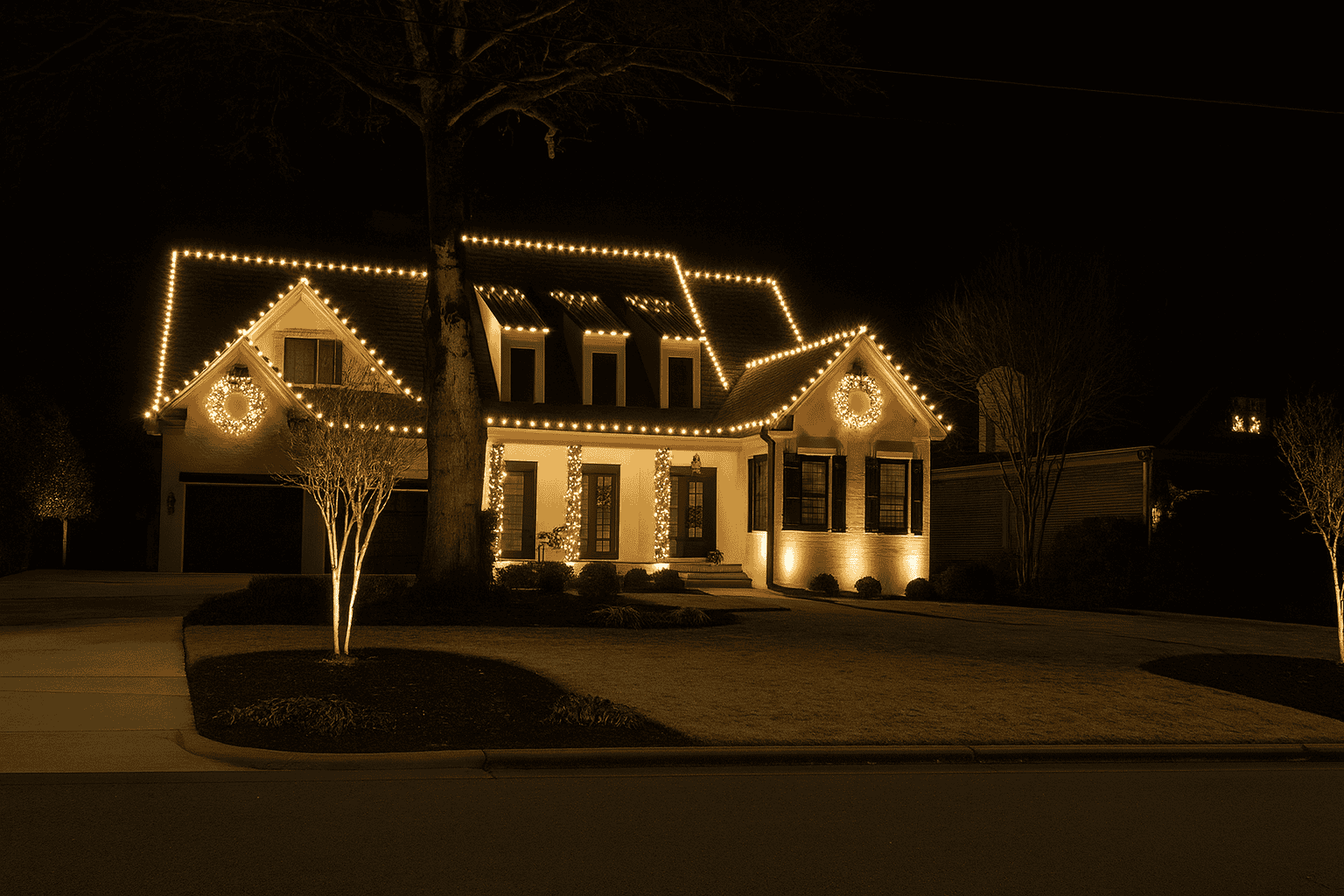

Christmas light clips are designed to hold lights on a roof or gutter without nails, staples, or screws, and when installed and removed correctly they typically do not damage shingles or gutters. Most roof and gutter damage from holiday lighting comes from fasteners that puncture materials, clips forced under brittle shingles, or lights pulled down quickly during removal.
How Christmas Light Clips Attach to a Home
Light clips are small plastic fasteners that hold each bulb or section of wire in place. Instead of piercing the roof or trim, they grip an edge that already exists on the home, such as the lip of a gutter or the bottom edge of a shingle.
Because nothing is driven into the roofing material, the clip relies on tension and fit rather than holes. This allows the lights to stay straight and evenly spaced through the season and then come off without leaving marks behind.
Common Types of Christmas Light Clips
Different parts of a home call for different clips. Using the clip designed for each surface is one of the most important factors in preventing damage.
Gutter Clips
Gutter clips hook over the front lip of a gutter and hold the light upright along the roofline. They are the most common choice for straight runs of roofline lighting because they attach without touching the shingles at all.
Shingle Tabs
Shingle tabs slide gently under the bottom edge of a shingle and hold lights along roof edges, peaks, and rake lines where there is no gutter. They are thin and flexible so they can be inserted without lifting or bending the shingle.
All-in-One Clips
All-in-one clips are designed to work on either a gutter or a shingle edge. They are often used on homes where the roofline changes from gutter sections to peaks, allowing a consistent look across the entire display.
What Causes Roof and Gutter Damage From Holiday Lighting
When holiday lighting does damage a home, the cause is usually the attachment method or the removal process rather than the lights themselves. Common sources of damage include:
- Nails, staples, and screws that create holes in shingles, fascia, or trim, which can allow water to enter.
- Adhesive hooks that pull away paint or leave residue on siding and trim when removed.
- Clips forced under shingles in cold weather, when asphalt shingles are stiffer and more likely to crack or tear.
- Leaning ladders directly against gutters, which can bend or loosen them under the weight of a person.
- Pulling strands down by the wire during takedown, which can snap clips, lift shingles, or bend gutter edges.
Can Christmas Lights Damage Shingles?
Shingles are most vulnerable when they are lifted too far or handled in freezing temperatures. Asphalt shingles become more brittle in the cold, so a clip pushed in at the wrong angle can crack the edge or break the seal that helps shingles stay flat in wind.
Damage is far less likely when shingle tabs are inserted gently, without prying, and when the installation is completed before the coldest stretch of winter. Many roofing manufacturers also advise against nails or staples in shingles, since punctures can affect a roof’s weather resistance and, in some cases, its warranty.
How Winter Weather Affects Clips and Gutters
Lights stay outdoors for weeks, so they must hold up to wind, snow, and ice. In the Midwest, strong winter winds and repeated freeze-thaw cycles put steady pressure on every clip and connection.
Properly fitted clips keep strands snug against the roofline so wind does not catch and pull them. Snow and ice can add weight to gutters, which is one reason clips should hold lights along the front lip rather than inside the gutter channel, where ice can trap wire and block drainage.
Removing Lights Without Damaging the Roof
Takedown is when much of the avoidable damage happens. Removing lights by pulling the strand from the ground can snap clips and lift shingles, especially when the roof is cold or icy.
A careful takedown removes each clip individually, working along the roofline from a properly placed ladder. Shingle tabs are slid out in the same direction they were inserted, and gutter clips are unhooked rather than pried. Choosing a takedown day without ice on the roof also reduces strain on cold, brittle roofing materials.
What to Check Before Lights Go Up
A quick look at the roof and gutters before installation helps prevent problems later. Loose or curling shingles, gutters pulling away from the fascia, and damaged trim should be addressed first, since clips hold most securely on surfaces that are already in good condition.
It is also worth noting any areas where electrical cords will run across the roof or along gutters. Planning cord routes in advance keeps wires from being pinched under shingles or left loose where wind and snow can pull on them.
Understanding How Clips Protect Roofs and Gutters
Christmas light clips are designed to protect a home by attaching lights without holes, adhesives, or permanent fasteners. Damage is uncommon when the correct clip is used for each surface, shingles are handled carefully in cold weather, ladders are kept off the gutters, and lights are removed clip by clip rather than pulled down.
Homeowners who want to see how roofline lighting is installed and removed as part of a seasonal service can learn more about Christmas Light Installation in Omaha, NE.
