
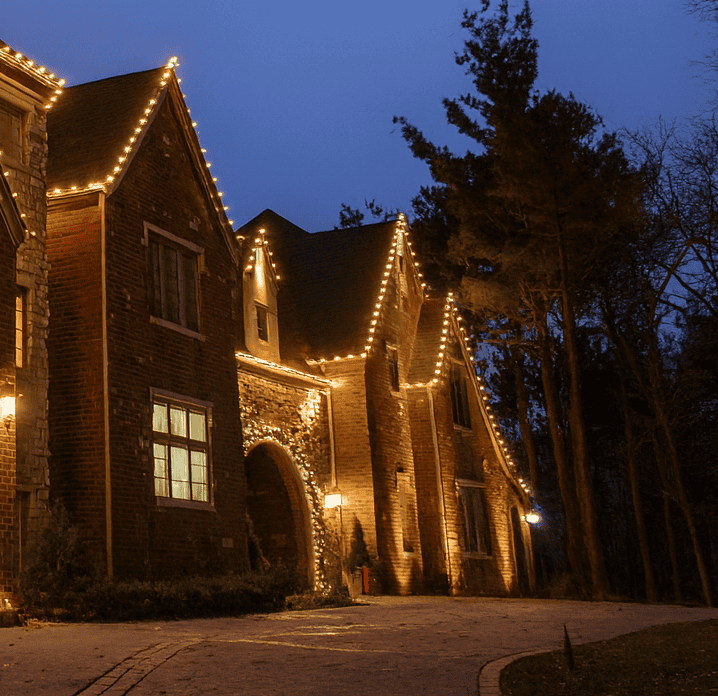

A Christmas light timer is a device that turns outdoor holiday lights on and off automatically on a set schedule, so the display runs every evening without anyone plugging it in or switching it off. Timers range from simple plug-in models to light-sensing and app-controlled options, and they help manage energy use, convenience, and safety throughout the season.
Why Automated Lighting Is Used for Holiday Displays
Without a timer, outdoor lights have to be turned on by hand each evening and turned off again before bed. Over a season that runs from late November into January, that is dozens of trips outside, often in cold or icy weather.
Automating the schedule removes that routine entirely. The display turns on at the same time each night, stays on for a set number of hours, and shuts off on its own, even when the household is busy, away, or simply forgets.
Common Types of Christmas Light Timers
Several types of timers are used for outdoor holiday lighting. Each controls the schedule in a slightly different way.
Mechanical Plug-In Timers
Mechanical timers use a rotating dial with small pins or tabs that mark the on and off times. They are simple and inexpensive, but they can drift after a power interruption and need to be reset when the clock changes.
Digital Timers
Digital timers use a programmable display to set exact on and off times. Many allow different schedules for different days and include battery backup that keeps settings in place during brief power outages.
Light-Sensing Timers
Light-sensing timers, sometimes called photocell or dusk-to-dawn timers, use a small sensor to detect when it gets dark. The lights turn on automatically at dusk and then shut off after a set number of hours. Because sunset shifts throughout the season, this type keeps the start time matched to actual darkness. In the Midwest, where December sunsets can arrive before 5 p.m., that means the display comes on as soon as it is dark enough to be seen.
Smart Plugs and App-Controlled Systems
Smart plugs and lighting controllers connect to a home’s Wi-Fi network and can be scheduled or adjusted from a phone. Color-changing RGB systems often use their own controllers, allowing homeowners to change colors, patterns, and schedules remotely without going outside.
How Many Hours a Day Should Christmas Lights Be On?
Most homeowners run their outdoor lights for about five to six hours each evening, typically turning on around dusk and shutting off between 10 and 11 p.m. This covers the hours when neighbors and passersby are most likely to see the display while limiting overnight energy use.
Some households extend the schedule on weekends or holidays, or set a shorter early-morning window for dark winter mornings. A programmable or smart timer makes it easy to adjust these schedules as the season goes on.
Energy Savings and Convenience
Because a timer limits how long lights stay on each night, it prevents displays from running until morning when no one is watching. Combined with LED lighting, which uses far less electricity than incandescent bulbs, a timed schedule keeps seasonal energy use predictable.
The convenience is just as valuable. The display is consistent every night, and there is no need to step outside in freezing temperatures to plug in or unplug cords.
Safety and Home Security
Timers reduce the chance of lights being left on for long, unattended stretches, which limits wear on cords and connections. They also make it unnecessary to handle plugs and outdoor outlets in wet or icy conditions every day.
Automated lighting can also help a home look occupied during holiday travel. When the display continues to turn on and off on its regular schedule, the home appears lived in even when the household is away.
Installing Timers for Outdoor Use
Timers used outdoors should be rated for outdoor use and protected from moisture. Plugging them into GFCI-protected outlets, keeping connections off the ground, and using weather-resistant covers or enclosures help prevent tripped outlets during rain and snow.
Larger displays are often divided into separate zones, such as the roofline, trees, and walkway lighting, each on its own circuit and timer. This keeps circuits within their limits and allows different areas to follow different schedules if desired.
Common Timer Issues to Watch For
A brief power outage can reset some timers, causing lights to turn on at the wrong time or not at all. Mechanical timers are especially prone to this, while many digital and smart timers keep their settings through short interruptions.
Light-sensing timers need a clear view of the sky. If the sensor is placed under an overhang or near a bright porch light, it may not detect darkness correctly. Checking the schedule after storms, power interruptions, and seasonal time changes keeps the display running as planned.
Understanding Christmas Light Timers and Smart Controls
Christmas light timers automate the daily on and off schedule of a holiday display, from simple plug-in models to light-sensing and app-controlled systems. A timed schedule keeps the display consistent, manages energy use, reduces daily handling of outdoor connections, and helps a home look occupied during travel.
Homeowners who want to see how automated timers are set up as part of a complete seasonal lighting service can learn more about Christmas Light Installation in Omaha, NE.
