
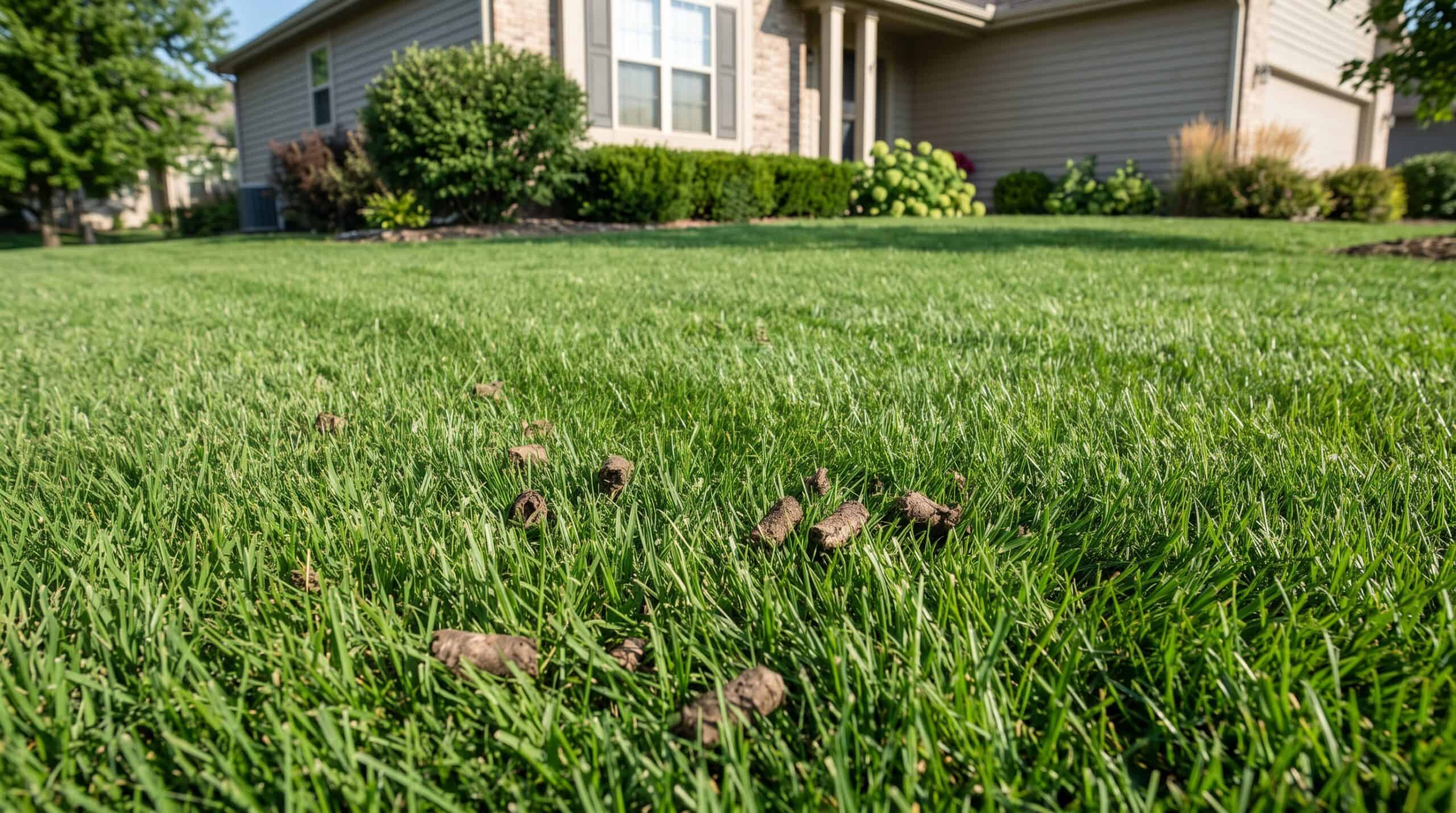

After lawn aeration, the lawn is covered with small soil plugs and open holes left behind by the core aerator. Over the next several weeks, the plugs break down, the holes gradually fill in, and grass roots begin using the new space to reach air, water, and nutrients. Most visible improvement appears during the following growing season.
What the Lawn Looks Like Right After Aeration
Immediately after aeration, a lawn can look a little rough. Small cores of soil, usually two to three inches long, are scattered evenly across the surface, and the lawn is dotted with holes where those cores were removed.
This appearance is normal and temporary. The plugs are a sign that the soil was opened deeply enough to relieve compaction. Lawns with heavier clay soil often show more noticeable plugs because dense soil holds together when it is pulled from the ground.
What Happens to the Soil Plugs
The soil plugs do not need to be raked up or removed. Left in place, they break down naturally through rainfall, irrigation, mowing, and normal weathering.
As they break apart, the plugs return soil and organic matter to the surface. That material mixes with the thatch layer and introduces soil microbes that help decompose excess thatch over time. In most lawns, the plugs are largely gone within two to three weeks, depending on moisture and temperature.
The First Two to Four Weeks
Most of the important change after aeration happens below the surface. The open holes allow oxygen to move into the root zone, help water soak in instead of running off, and give roots room to grow into soil that was previously too compacted to penetrate.
During this period, grass roots begin expanding into the openings. The holes slowly fill with new root growth, broken-down plug material, and surrounding soil. On the surface, the lawn usually looks much the same as it did before aeration, aside from the gradually disappearing plugs.
Should You Water Your Lawn After Aeration?
Watering after aeration depends largely on whether grass seed was applied at the same time. When seed is present, the soil surface needs consistent moisture for germination, which usually means light, frequent watering for the first few weeks until new grass is established.
When no seed was applied, normal watering is generally enough. Aerated soil absorbs water more efficiently than compacted soil, so rainfall and irrigation reach the root zone more effectively in the weeks after aeration.
Mowing and Foot Traffic After Aeration
Mowing can typically continue on a normal schedule after aeration. Mowing over the plugs actually helps break them down faster. Keeping the mower at a normal or slightly higher height reduces stress on the lawn while roots recover.
If new seed was applied, limiting heavy foot traffic for a few weeks gives young seedlings time to establish. Seedlings have shallow, fragile roots at first, and repeated traffic can disturb them before they anchor into the soil.
How New Seed and Aeration Work Together During Recovery
When seed is applied along with aeration, many seeds settle into the open holes, where they are protected and in direct contact with soil. This seed-to-soil contact is one of the main reasons aeration and overseeding are commonly paired.
New grass from seed usually begins to emerge within one to three weeks, depending on grass type, temperature, and moisture. Tall fescue and perennial ryegrass tend to germinate faster, while Kentucky bluegrass can take several weeks. Early seedlings often appear in rows or clusters that follow the aeration holes, then fill in as the lawn thickens.
When Results Become Noticeable
Aeration improves the growing environment rather than producing an instant change in appearance. For that reason, the clearest results usually show up over the following months rather than the following days.
In Omaha, Nebraska and surrounding areas, cool-season lawns aerated in late summer or early fall use the remaining weeks of the season to build roots before winter dormancy. Those deeper roots tend to show up the next spring as thicker growth, more even color, and improved tolerance to summer heat and drought stress.
Signs That Aeration Is Working
Several changes indicate that aeration is improving soil conditions:
– Water soaks in more evenly instead of puddling or running off
– Thin areas begin to fill in as roots spread and new seedlings mature
– The lawn handles heat and dry periods with less browning
– Thatch gradually becomes thinner as soil microbes break it down
– Soil feels less hard and compacted when probed or walked on
These improvements build gradually and often become more noticeable with consistent yearly aeration.
Understanding the Recovery Process
The weeks after aeration are a recovery and rebuilding period. The plugs and holes that look untidy at first are part of how compacted soil opens up and how roots gain room to grow.
Knowing what to expect makes it easier to care for the lawn during this period and to recognize progress as it happens. For a broader look at how aeration fits into overall lawn health, homeowners can learn more about Lawn Aeration in Omaha, NE and how compaction relief supports long-term turf growth.