
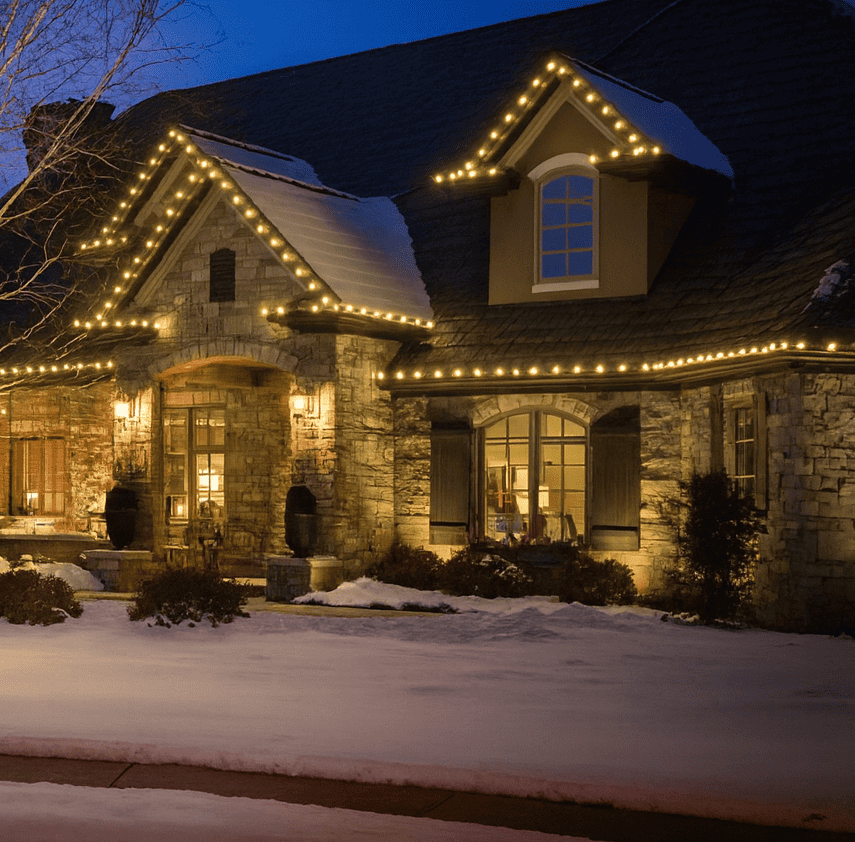

Outdoor Christmas lights usually stop working because of moisture in a connection, a tripped GFCI outlet or breaker, a damaged bulb or socket, or a cord that has been pulled, pinched, or chewed. Timers, power interruptions, and winter weather can also cause part or all of a display to go dark during the season.
Moisture and Tripped GFCI Outlets
Moisture is one of the most common reasons outdoor lights go out. Rain, melting snow, and morning frost can seep into plug connections, extension cord joints, and sockets, especially where connections sit on the ground or in low spots that collect water.
Most outdoor outlets are protected by a GFCI, or ground fault circuit interrupter. When it detects moisture or a small electrical leak, it shuts off power as a safety measure. This is why lights may work fine on a dry evening and then go dark after a rainy or snowy day.
Overloaded Circuits and Breakers
Every outdoor circuit has a limit to how much power it can safely deliver. Connecting too many strands end to end, or running holiday lights on the same circuit as other outdoor equipment, can trip a breaker and turn off the entire display.
LED lighting draws much less power than incandescent lighting, which makes overloads less likely, but large displays still need to be planned with circuit capacity in mind. Splitting a display into separate zones across different outlets helps keep each circuit within its limits.
The cords themselves matter too. Extension cords designed for indoor use are not built for cold, wet conditions and can crack or short outdoors, while outdoor-rated cords use heavier insulation intended to handle moisture and freezing temperatures.
Damaged Bulbs, Sockets, and Wires
Over the course of a season, individual bulbs can loosen, crack, or fail. On some strand types, a single loose or failed bulb can interrupt the flow of power to the rest of a section, causing a whole run of lights to go out at once.
Wires and sockets can also be damaged by weather, foot traffic, snow shoveling, or snow removal equipment that catches cords running across driveways and walkways. Even a small cut in the wire insulation can allow water in and cause a short.
Age plays a role as well. Strands that have been installed, removed, and stored for many seasons are more likely to develop worn sockets, brittle wires, and weak connections, which is why older lighting tends to fail more often as the season goes on.
Why Does Only Part of a Christmas Light Strand Work?
When only part of a strand is lit, the problem is usually isolated to one section. Many light strands are wired in segments, so a loose bulb, broken socket, or failed connection can turn off one section while the rest of the strand stays lit.
A strand that works up to a certain point and then goes dark often points to an issue at or just past that spot. Checking the first unlit bulb, the nearest socket, and any connection in that area is typically where troubleshooting begins.
Wind, Snow, and Winter Weather
Outdoor lighting stays exposed to the elements for weeks at a time. In the Midwest, strong winter winds can loosen clips, shift strands, and put strain on connections, while heavy snow and ice add weight to lights along gutters and rooflines.
Repeated freeze-thaw cycles can also work connections loose over time. As water freezes and expands inside a plug or socket, it can push components apart or crack plastic housings, leading to outages that appear days after a storm.
Wildlife and Pests
Squirrels, birds, and other animals are a surprisingly common cause of outages. Squirrels may chew through wires or carry off bulbs, while birds sometimes nest near gutters and dislodge strands. Damage from wildlife often shows up as a single dark section rather than a full-display outage.
Timer and Power Issues
Sometimes the lights themselves are fine, but the timer is not. A brief power outage can reset some timers, causing the display to turn on at the wrong time or not at all. Timers can also be bumped, unplugged, or affected by moisture just like any other outdoor connection.
When an entire display goes dark at once and no breaker or GFCI has tripped, the timer and the outlet it is plugged into are usually the first things to check.
How Outages Can Be Prevented
Many common outages can be prevented with careful installation. Keeping plug connections off the ground, sealing or covering outdoor connections, routing cords away from driveways and walkways, and leaving a small downward loop in cords so water drips away from outlets all reduce moisture problems.
Using professional-grade lighting with sealed bulbs and heavier wire, securing strands firmly with the correct clips, and dividing large displays across multiple circuits also help a display stay lit through wind, snow, and freezing temperatures. Regular checks during the season allow small issues to be repaired before they spread.
Understanding Why Outdoor Christmas Lights Go Out
Most outdoor lighting outages come down to a few common causes: moisture and tripped GFCI outlets, overloaded circuits, damaged bulbs or wires, winter weather, wildlife, and timer or power interruptions. Knowing these causes makes it easier to identify problems quickly and to plan a display that holds up through the entire season.
Homeowners who want to see how in-season maintenance and repairs are handled as part of a seasonal lighting service can learn more about Christmas Light Installation in Omaha, NE.
