
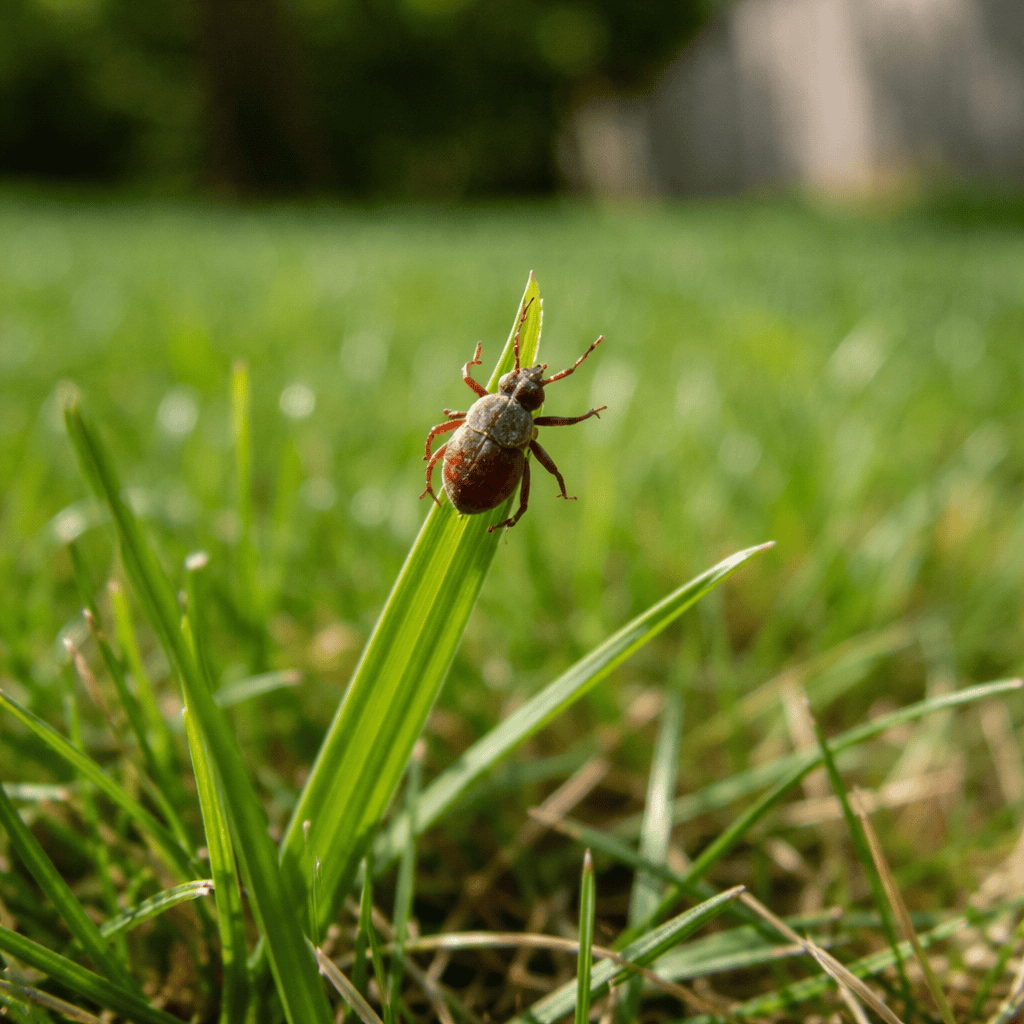

Flea and tick season in Omaha typically refers to the period when environmental conditions allow these pests to become active, reproduce, and spread in outdoor spaces. This activity is primarily driven by temperature, moisture, and host availability, with peak activity occurring during warmer months. In Omaha, Nebraska and surrounding areas, seasonal weather patterns create a clear cycle of pest activity throughout the year.
How Seasonal Conditions Affect Flea and Tick Activity
Fleas and ticks are highly dependent on environmental conditions to survive and reproduce, including what draws fleas and ticks into a lawn. Temperature plays a central role, as both pests become more active when conditions consistently rise above freezing.
In early spring, as soil temperatures begin to warm and vegetation starts to grow, dormant fleas and ticks emerge from protected areas such as leaf litter, soil, and shaded lawn edges. Moisture from spring rains further supports their survival, allowing them to remain active for longer periods.
During the summer months, activity typically increases due to sustained warmth. However, extreme heat and dry conditions can temporarily reduce activity in open areas, pushing fleas and ticks toward shaded, humid environments where they are better protected.
Peak Flea and Tick Season in Omaha
In Omaha, flea and tick season generally follows a predictable pattern based on Midwest climate conditions.
Spring (March to May)
Spring marks the beginning of active flea and tick season. As temperatures rise and lawns begin to green up, pest populations start to increase. This is often when homeowners first notice activity in yards, especially in areas with dense grass, mulch beds, or shaded edges.
Summer (June to August)
Summer is typically the peak season for fleas and ticks. Warm temperatures accelerate their life cycles, allowing populations to grow quickly. During this time, pets and people are more likely to encounter pests while spending time outdoors.
Ticks tend to remain active in taller grass and shaded areas, while fleas thrive in areas where animals frequently rest or travel.
Fall (September to November)
Flea and tick activity often continues into the fall, especially during mild seasons. Cooler temperatures may slow reproduction, but pests can remain active until consistent frost occurs.
In Omaha, extended fall warmth can allow flea and tick populations to persist longer than expected, particularly in protected areas of the lawn.
Winter (December to February)
While outdoor activity significantly declines during winter, fleas and ticks do not fully disappear. Some may survive in insulated environments such as soil, leaf debris, or near foundations. Indoor environments can also support flea activity, especially if pets are present.
Where Fleas and Ticks Are Most Active in the Lawn
Fleas and ticks are not evenly distributed across a lawn, especially when you look at where fleas and ticks tend to live. Instead, they concentrate in areas that provide protection, moisture, and access to hosts.
Common high-activity areas include:
• Shaded zones under trees or along fence lines
• Tall or dense grass that retains humidity
• Leaf litter, mulch beds, and organic debris
• Edges where lawns meet wooded or natural areas
• Areas where pets frequently rest or travel
These environments support the flea life cycle and tick habitat by maintaining stable moisture levels and offering protection from direct sunlight.
Why Flea and Tick Seasons Can Vary Each Year
Although flea and tick season follows general patterns, the timing and intensity can vary depending on yearly weather conditions.
Mild winters may allow more pests to survive into spring, leading to earlier and more intense activity. Wet springs can increase survival rates, while dry summers may temporarily reduce visible populations in exposed areas.
In Omaha and surrounding regions, fluctuating temperatures and seasonal rainfall can shift pest timelines slightly from year to year. This variability makes it important to understand the broader seasonal pattern rather than relying on exact calendar dates.
How Flea and Tick Life Cycles Influence Seasonal Activity
Understanding the life cycle of fleas and ticks helps explain why their activity increases during certain times of the year.
Fleas go through four stages: egg, larva, pupa, and adult. Warm, humid conditions allow these stages to progress more quickly, leading to faster population growth during spring and summer.
Ticks also develop through multiple stages, requiring a host at each stage to survive. Their activity is closely tied to both environmental conditions and the presence of animals in the area.
Because these life cycles are continuous during favorable conditions, populations can build over time rather than appearing suddenly.
Is Flea and Tick Season Only a Summer Problem?
Flea and tick activity is often associated with summer, but it is not limited to that season. In many cases, activity begins earlier and lasts longer than expected.
In Omaha, it is common for flea and tick season to extend from early spring through late fall. Even outside peak months, low-level activity can still occur, especially in protected environments.
This extended timeline is why homeowners often notice recurring pest presence throughout multiple parts of the year rather than during a single season.
How Seasonal Awareness Supports Lawn Management
Understanding when flea and tick activity occurs helps homeowners better recognize patterns in their lawn environment. Seasonal awareness allows for a clearer understanding of when pest pressure is likely to increase and where activity is most likely to occur.
Homeowners looking to better understand how seasonal pest activity relates to overall lawn conditions can explore more about flea & tick defense as part of a broader approach to managing outdoor environments.