
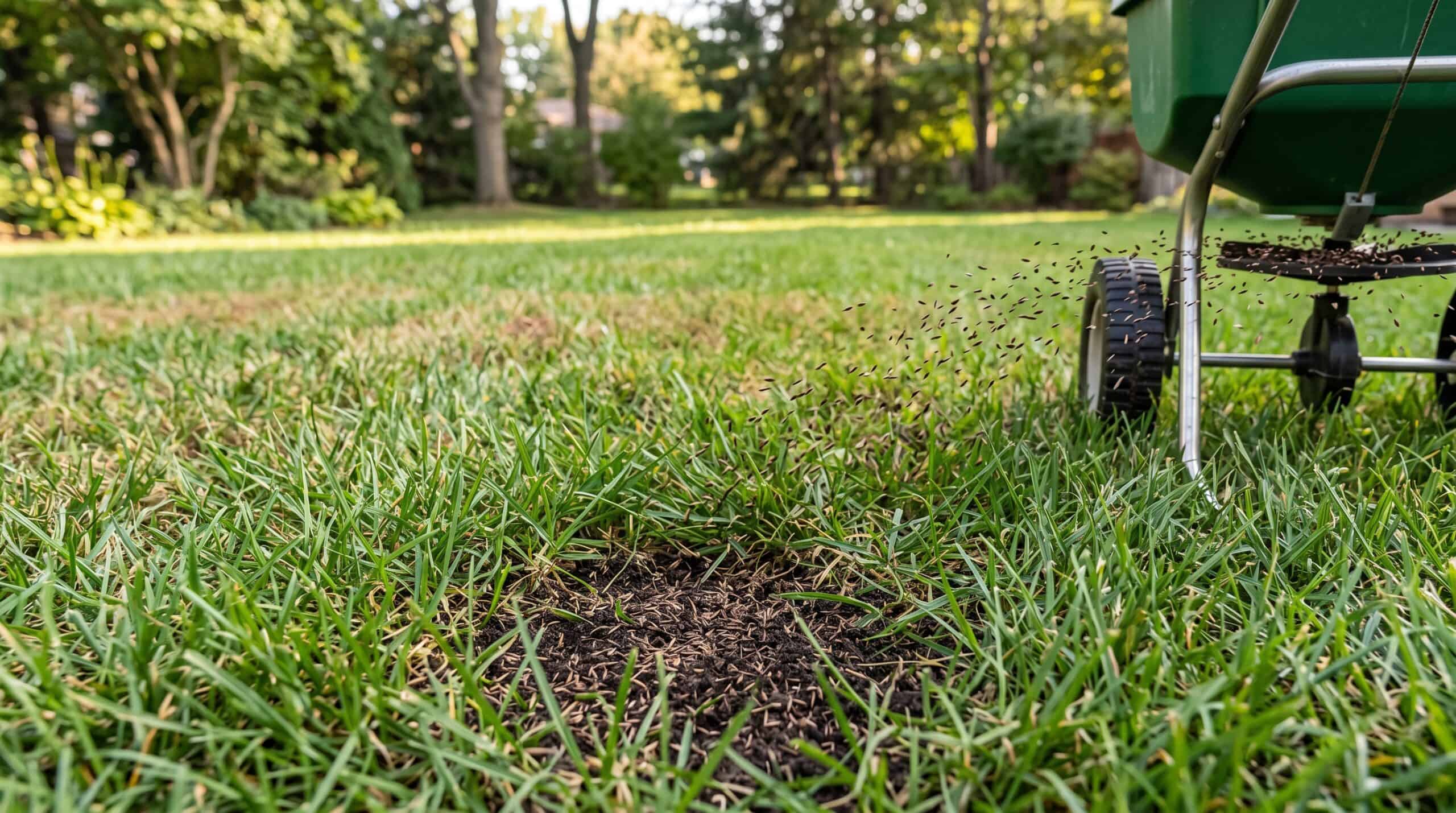

Lawn overseeding is the process of spreading new grass seed directly into an existing lawn without removing the current turf. Its purpose is to introduce improved grass varieties, thicken thin areas, and fill bare spots so the lawn grows denser over time. In the Omaha area, overseeding is most often done as part of fall lawn care.
How Overseeding Works in an Established Lawn
When seed is spread across an established lawn, it settles between the existing grass plants and into open patches of soil. With adequate moisture and good seed-to-soil contact, the seed germinates and the young grass plants grow alongside the turf that is already there.
Over several weeks, these new plants mature and begin to fill gaps in the canopy. A denser lawn shades the soil surface, which limits the open space where weeds can take hold. It also spreads more root systems through the soil, which supports overall turf health and resilience.
Overseeding works gradually rather than all at once. Each new generation of grass adds to the lawn’s density, which is why many homeowners treat overseeding as a recurring part of lawn care rather than a one-time project.
Why Newer Grass Varieties Matter
Grass seed is not static. Turfgrass breeders continually develop new cultivars, which are specific varieties within a grass species, selected for traits such as disease resistance, insect tolerance, and drought tolerance. Developing these cultivars takes years of research, field trials, and performance testing.
A lawn planted ten or twenty years ago likely contains older varieties that lack many of these improvements. Overseeding introduces newer genetics into the existing turf a little at a time. As the newer plants establish, the lawn as a whole becomes better equipped to handle stress.
This matters in Omaha, Nebraska and surrounding areas, where lawns face hot, humid summers, periods of drought, and cold winters. Most local lawns are made up of cool-season grasses such as tall fescue, Kentucky bluegrass, and perennial ryegrass. Improved cultivars of these grasses are bred to hold their color and density more consistently through those seasonal swings.
Understanding Certified Grass Seed
Certified grass seed has been tested by an independent seed certification agency to confirm that the contents match what the label states. Certification verifies the variety, and the label reports germination rate, purity, and the presence of weed seed or other crop seed.
For example, if a certified seed label shows 99 percent pure seed with no weed seed, that is what the bag contains. That accuracy helps keep unwanted grasses and weeds from being introduced into a lawn during overseeding.
Not all seed sold at retail is certified. Uncertified blends may list higher percentages of inert material, other crop seed, or older varieties. Reading the seed label for purity, germination percentage, and weed seed content is one of the most practical ways to understand what is going into a lawn.
Seeding Rates and Even Coverage
Seeding rates are measured in pounds of seed per 1,000 square feet of lawn. Rates vary by grass species, but overseeding an existing lawn generally calls for less seed than establishing a new lawn from bare soil. A rate of around 2 pounds per 1,000 square feet is a common reference point for thickening established turf.
Even distribution is just as important as the rate itself. Uneven spreading can leave clumps of seedlings in some areas and thin streaks in others. Properly calibrated commercial spreaders help distribute seed uniformly, so new growth fills in consistently across the lawn.
Why Fall Is the Preferred Time to Overseed
Fall offers the most favorable conditions for cool-season grass seed to establish. Soil temperatures stay warm from summer, which encourages germination. Cooler air temperatures reduce heat stress on young seedlings, and fall rainfall helps keep the soil moist.
Weed competition also drops in fall. Annual weeds such as crabgrass decline as temperatures cool, which leaves more room and resources for new grass. Seedlings that germinate in late summer or early fall have time to develop roots before winter dormancy. They also get a second growth period in spring before summer heat arrives.
In the Omaha region, this typically means late August through September. Spring overseeding is possible, but young grass often struggles through its first Midwest summer. Spring timing can also conflict with pre-emergent weed control products, which can prevent grass seed from germinating.
Can You Overseed Without Aerating First?
Overseeding can be done on its own, but results depend heavily on whether seed reaches the soil. On lawns with thatch buildup or compacted soil, much of the seed can end up sitting on the surface. There it is more likely to dry out, wash away, or be eaten by birds.
Compaction is common in eastern Nebraska, where many lawns grow on clay-heavy soils that pack down over time. Core aeration removes small plugs of soil, creating openings where seed can settle and make direct contact with moist soil. This is why overseeding is so often paired with aeration, a relationship explained further on our Lawn Aeration in Omaha, NE page.
How Overseeding and Topdressing Fit Together
Topdressing with compost is another practice commonly done at the same time as overseeding. A thin layer of compost spread over the lawn adds organic matter to the soil, supports microbial activity, and improves nutrient cycling. It also helps the soil retain moisture.
Compost also gives newly spread seed a protective covering. That covering helps hold moisture around the seed during germination, which supports more consistent establishment. Over time, the added organic matter improves soil structure, making it easier for young roots to grow deeper.
Overseeding as Part of Long-Term Lawn Health
Lawns naturally thin over time from foot traffic, seasonal stress, disease, and the normal aging of grass plants. Regular fall overseeding offsets that thinning by continually adding new plants and improved varieties. Each year’s seeding builds on the last, gradually producing a thicker, more resilient lawn.
Even so, overseeding depends on what is happening beneath the surface. Seed establishes most reliably in loose, healthy soil where roots, water, and air can move freely. For that reason, relieving soil compaction remains the foundation for successful overseeding. Fall aeration creates the conditions that allow new grass to take root and contribute to lasting lawn health.