
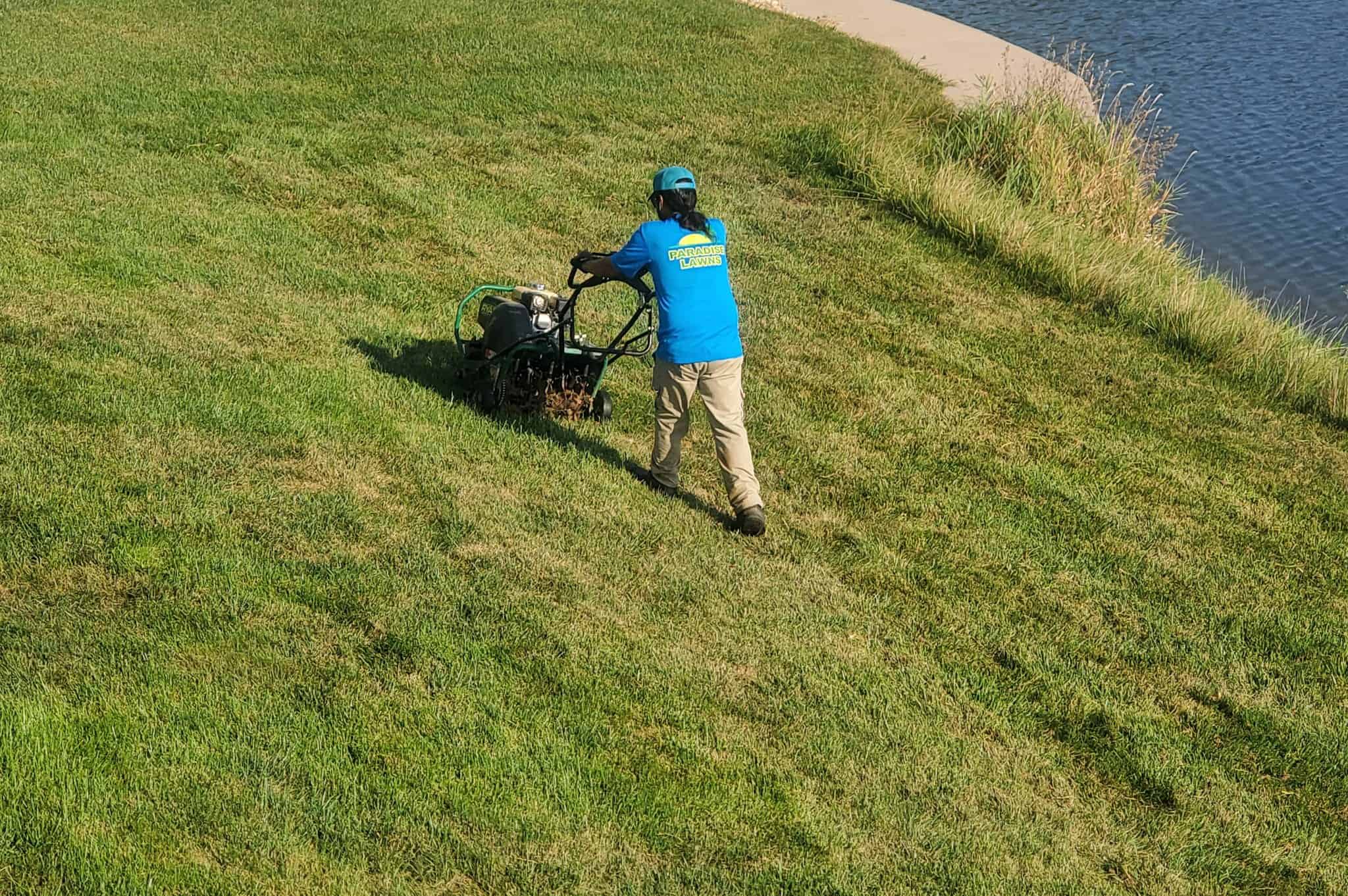

Lawn aeration in Omaha is a core service designed to relieve soil compaction and improve how your lawn takes in air, water, and nutrients. In this region, heavy clay soils and regular foot traffic naturally lead to compacted conditions over time. Aeration addresses that by creating space in the soil so your grass can function the way it’s supposed to.
Lawn aeration is the process of mechanically removing small plugs of soil from the lawn using a core aerator. These openings allow the root system to expand more freely and help water and nutrients move deeper into the soil profile where they are most effective.
In the Omaha area, aeration is typically done in the fall, since lawns are better positioned to recover and build stronger root systems. If you’re comparing timing, this breakdown of spring vs fall aeration in Omaha helps explain why fall is usually the better window.
How Lawn Aeration Works
Over time, lawns become compacted from everyday use. Foot traffic, pets, mowing, and natural settling all contribute to tighter soil structure. When soil becomes compacted, it limits how much oxygen, water, and nutrients can reach the root zone.
Core aeration works by removing plugs of soil throughout the lawn. If you want a deeper breakdown, here’s a simple explanation of how lawn aeration actually works in real lawn conditions. These small openings reduce resistance in the soil and create pathways for roots to grow deeper and spread more evenly. As the plugs break down, they return beneficial soil material to the surface and help improve overall soil structure.
This process supports stronger root development, which leads to a lawn that is more resilient, more consistent in color, and better able to handle stress over time.
Why Lawn Aeration Is Important in Omaha
Soil conditions in Omaha and surrounding areas tend to be heavier and more compacted than in other regions. This makes aeration a necessary part of maintaining a healthy lawn rather than an occasional add-on.
Without aeration, compacted soil can restrict growth and limit the effectiveness of watering and fertilization. Even with a well-structured lawn care program, compacted soil can prevent those inputs from reaching the areas where they are needed most.
By opening up the soil, aeration allows the rest of your lawn care program to perform more effectively and helps maintain a more stable growing environment throughout the season.
Thatch Reduction and Soil Health
Thatch is a layer of organic material that builds up between the grass blades and the soil surface. When thatch becomes excessive, it can block water, nutrients, and air from reaching the roots.
Aeration helps manage thatch naturally. As soil plugs are pulled to the surface, they introduce beneficial microbes that break down the thatch layer over time. This keeps thatch at a manageable level and supports a healthier soil environment.
Rather than aggressively removing thatch all at once, aeration works gradually to improve balance in the lawn without causing unnecessary stress or damage.
Water Movement and Drainage Improvement
Compacted soil often leads to issues like puddling and runoff. When water cannot penetrate the soil effectively, it tends to sit on the surface or move away from the lawn entirely.
Aeration improves how water moves through the soil. By reducing compaction, it allows rainfall and irrigation to soak in more evenly. This helps the lawn retain moisture where it is needed and reduces the likelihood of standing water or dry patches.
Improved water absorption also means more efficient use of natural rainfall, which can help reduce the need for supplemental watering.
What to Expect After Aeration
After aeration, small soil plugs will remain on the surface of the lawn. These plugs will break down naturally over time and do not need to be removed. Here’s a closer look at what happens in the weeks after aeration and how to care for new seed.
In the weeks following service, the lawn begins to respond as the soil structure improves. Root systems expand, and the lawn becomes better able to absorb nutrients and moisture. Results are not instant but build steadily as conditions improve beneath the surface.
Aeration is most effective when performed as part of a consistent lawn care program rather than as a one-time service.
Pairing Aeration with Overseeding and Topdressing
Aeration is often paired with overseeding and compost topdressing to improve overall results. The openings created during aeration provide ideal seed-to-soil contact, which supports better germination when overseeding is performed. That’s why many homeowners choose to pair aeration with overseeding to help fill in thin areas and improve overall lawn density.
Topdressing with compost can further improve soil structure and introduce additional organic material. In many cases, adding compost after aeration helps improve soil quality over time rather than just surface appearance. These services work together to support long-term lawn health rather than short-term appearance.
While each service can stand alone, combining them in the fall typically produces the most consistent and noticeable improvements.
Double Aeration for Thatch and Compaction
In lawns with more significant compaction or thatch buildup, double aeration may be recommended. This involves making two passes over the lawn to increase the number of openings in the soil.
Double aeration provides a more aggressive approach without the disruption often associated with traditional power raking. It helps improve soil conditions over time while minimizing surface damage.
As the lawn improves and thatch levels return to a manageable range, service can transition back to a standard aeration schedule.
Who Lawn Aeration Is Best Suited For
Lawn aeration is well suited for both residential and commercial properties in Omaha and surrounding areas. If you’re unsure whether your lawn actually needs it, these common signs your lawn is ready for aeration can help you identify the right timing. It is especially beneficial for lawns that:
• Experience regular foot traffic or use
• Show signs of compaction or thinning
• Have uneven water absorption or drainage issues
• Are part of an ongoing lawn care program
Because soil compaction occurs naturally, most lawns benefit from regular aeration regardless of size or usage.
A Consistent Part of Lawn Care
Aeration is not a standalone solution, but it plays an important role in supporting the overall health of your lawn. When combined with proper mowing, watering, and fertilization, it helps create the conditions needed for consistent growth and long-term stability.
Helpful Resources
• how aeration compares to dethatching and when each makes sense
• why professional aeration tends to produce better long-term results
• common misconceptions about aeration and what actually matters
If you have questions about lawn aeration or want to see if it fits your lawn, you can call or text 402-612-1527 to talk through what makes sense for your property.