
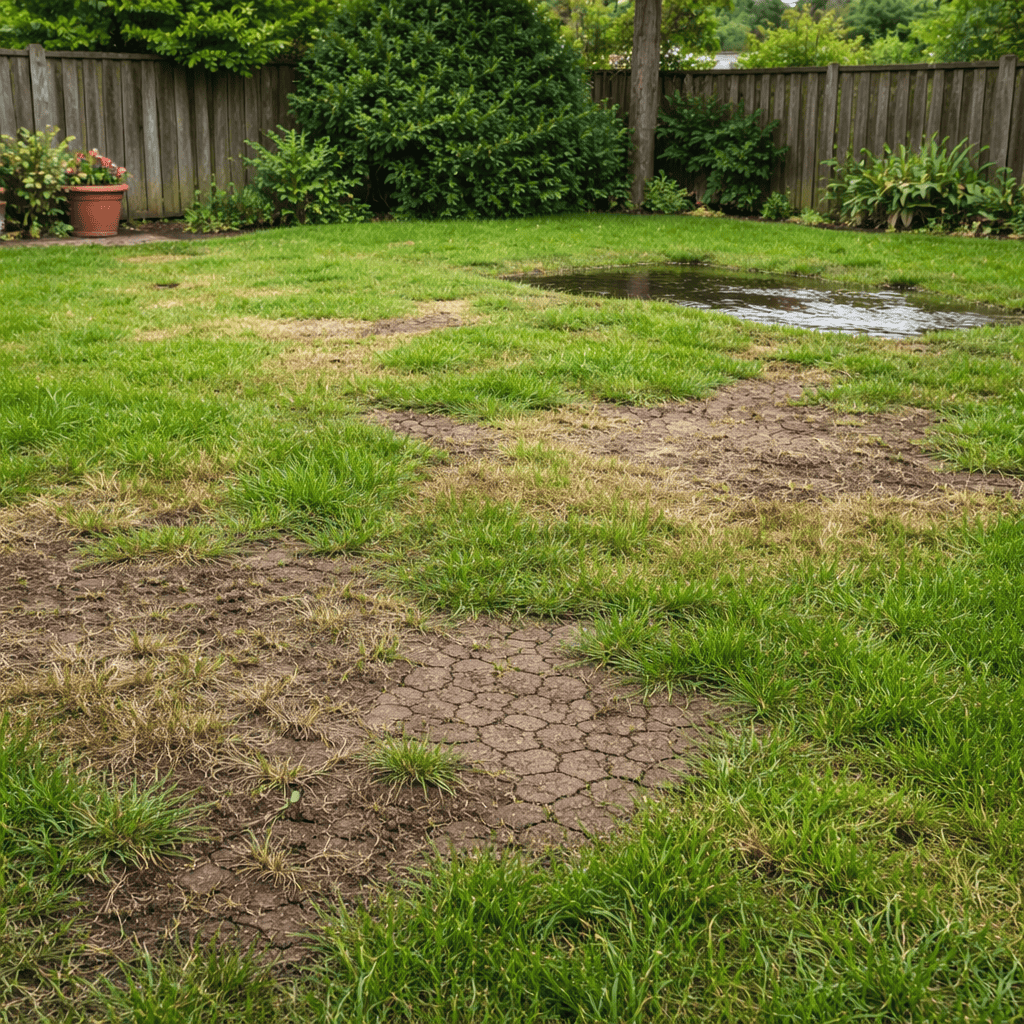

A lawn that needs aeration typically shows signs of compacted soil, reduced water movement, and struggling grass growth. Aeration is the process of loosening soil so air, water, and nutrients can reach grass roots more effectively. In Omaha, Nebraska and surrounding areas, clay-heavy soils and seasonal weather patterns can make these issues more noticeable over time.
What Is Lawn Aeration?
Lawn aeration is the process of creating small openings in the soil to reduce compaction and improve the movement of air, water, and nutrients. When soil becomes too dense, grass roots have a harder time expanding and accessing what they need to grow.
Over time, foot traffic, mowing, and natural settling can compress the soil surface. This limits root development and reduces the lawn’s ability to handle stress from heat, drought, or heavy rain.
How Soil Compaction Affects Lawn Health
Soil compaction restricts the natural flow of oxygen, water, and nutrients below the surface. Grass roots depend on these elements to grow deeper and stronger, which helps the lawn stay more resilient throughout the season.
In the Omaha area, soils often contain higher clay content, which can compact more easily. This can lead to shallow root systems, increased runoff, and uneven turf growth if conditions persist over time.
Thinning Grass
One of the most common signs a lawn may need aeration is thinning grass. When soil is compacted, roots struggle to access water and nutrients, which limits growth and reduces density.
Thin areas may appear patchy or weaker compared to the rest of the lawn. Over time, this can make the lawn more vulnerable to weeds and environmental stress.
Poor Water Drainage
Water that pools on the surface instead of soaking into the soil is another clear indicator of compaction. When soil is too dense, it prevents water from moving downward where roots can use it.
In some cases, homeowners may notice this more during spring rains. While excess moisture can highlight drainage issues, it often points back to underlying soil structure that benefits from seasonal soil improvement practices.
Dry or Hard Soil
Compacted soil often feels hard and dry, even after watering. Because water cannot penetrate deeply, it either runs off or evaporates quickly from the surface.
This creates a cycle where the soil remains dry below the surface, and grass roots are unable to access consistent moisture. Over time, this can lead to stress and reduced lawn vitality.
Discolored or Uneven Areas
Grass that appears yellow, brown, or uneven in color may be struggling to access nutrients and moisture. Healthy turf is typically consistent in color, while stressed areas often stand out visually.
These patches can develop when certain parts of the lawn experience more compaction than others, such as near walkways, driveways, or high-traffic zones.
When Lawn Aeration Works Best in Omaha
Seasonal timing plays an important role in how effective aeration is for long-term lawn health. In the Omaha area, aeration is most commonly associated with fall conditions, when cooler temperatures and natural growth cycles support stronger root development.
While some homeowners consider aeration in the spring, fall conditions tend to be more consistent for recovery and growth. Grass is typically better positioned to take advantage of improved soil conditions heading into the next season.
This timing also aligns with how lawns naturally prepare for winter, allowing roots to grow deeper and store energy more efficiently.
Why These Signs Often Appear Together
These warning signs are usually connected. Compacted soil affects multiple aspects of lawn health at the same time, including water movement, nutrient availability, and root growth.
For example, poor drainage can lead to both thinning grass and discolored areas. Similarly, dry soil conditions often result from the same underlying compaction issues.
What Makes Soil Compaction More Likely?
Several factors can increase the likelihood of soil becoming compacted over time:
• Frequent foot traffic or use of the lawn
• Repeated mowing patterns or heavy equipment
• Clay-heavy soil composition
• Seasonal weather patterns, including heavy spring rain followed by summer heat
In Omaha and surrounding areas, these factors often combine to gradually reduce soil structure if not addressed over time.
Is Lawn Aeration Always Necessary Every Year?
Not every lawn requires aeration every single year, but many benefit from it periodically depending on soil conditions and usage. Lawns with heavier clay soils or consistent traffic tend to show signs of compaction more quickly.
Understanding these patterns can help homeowners recognize when the lawn may benefit from improved soil conditions rather than addressing only the visible symptoms.
Understanding the Long-Term Role of Aeration
Addressing soil compaction is an important part of maintaining long-term lawn health. By improving the movement of air, water, and nutrients, aeration supports deeper root systems and more consistent turf growth over time.
Homeowners looking to better understand how this fits into a broader lawn care approach can learn more through Lawn Aeration in Omaha, NE.