
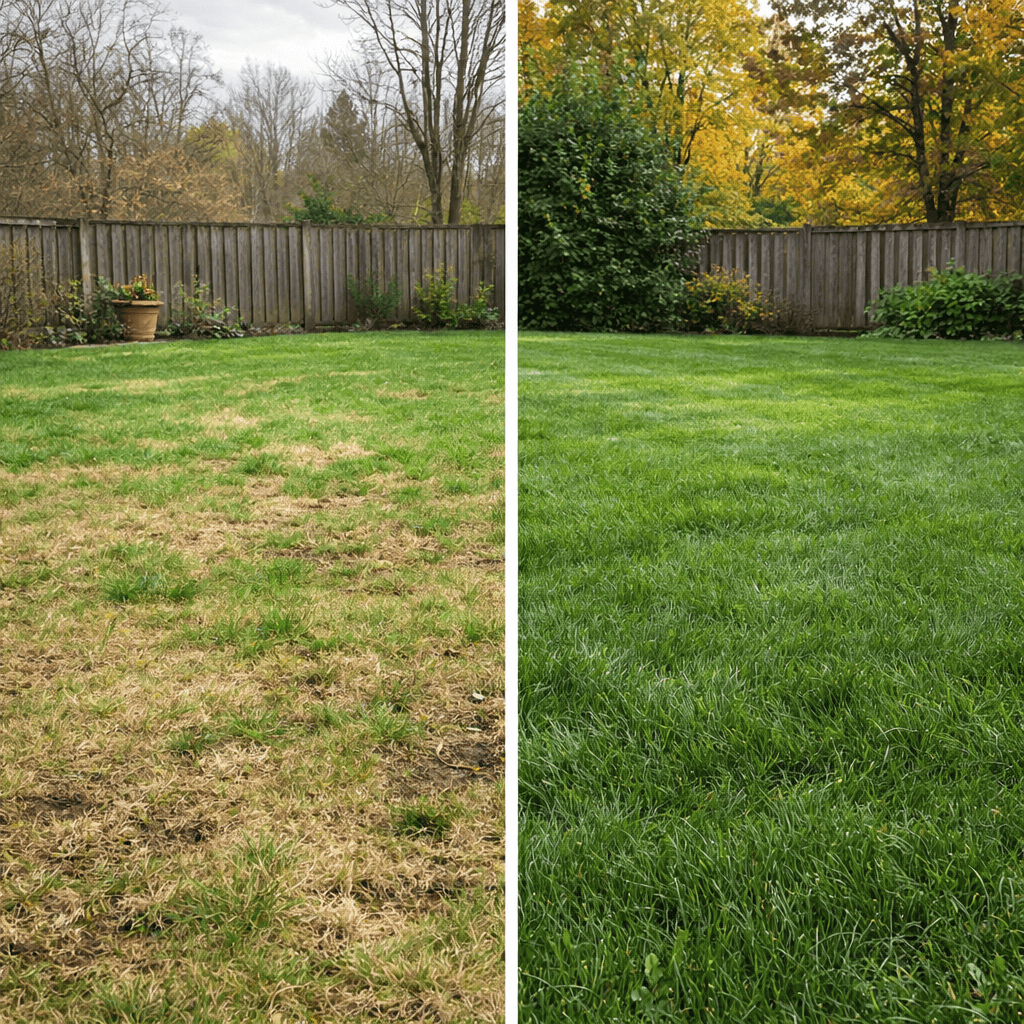

Spring vs fall lawn aeration refers to the difference in timing when soil is loosened to improve air, water, and nutrient movement to grass roots. While the process is the same, seasonal conditions affect how well lawns recover, grow roots, and respond overall. In Omaha, Nebraska, timing plays a key role due to temperature swings and soil conditions.
What Is Spring Lawn Aeration?
Spring lawn aeration refers to loosening compacted soil during the early part of the growing season, typically as lawns begin to green up after winter dormancy. This can help improve water movement and temporarily relieve surface compaction.
Because spring conditions often include increased rainfall and fluctuating temperatures, aeration during this time may highlight existing soil issues such as drainage or pooling. However, the lawn is also entering a period where energy is directed toward top growth rather than deeper root development.
What Is Fall Lawn Aeration?
Fall lawn aeration occurs later in the growing season, when temperatures begin to cool and grass naturally shifts its focus toward root development. This period is often associated with more stable growing conditions and reduced environmental stress.
In the Omaha area, fall timing aligns with how cool-season grasses prepare for winter. This allows the lawn to take advantage of improved soil conditions while building stronger root systems ahead of the next growing season.
How Spring and Fall Aeration Work Differently
While the physical process of aeration is the same, the way the lawn responds can vary depending on the season.
In spring, lawns are often dealing with excess moisture, early weed pressure, and rapid top growth. Aeration at this time can relieve compaction, but recovery may compete with other seasonal factors.
In fall, growth patterns shift below the surface. With fewer environmental stressors and more consistent temperatures, lawns are generally better positioned to respond to improved soil conditions by expanding root systems.
Why Spring Aeration Can Lead to More Weed Pressure
Spring aeration can unintentionally create conditions that allow weeds to take hold more easily. One of the main reasons is how it interacts with pre-emergent treatments used to prevent weeds like crabgrass and foxtail.
When soil is aerated, it breaks up the protective barrier created by pre-emergent products. This can allow weed seeds to push through more easily, even if the product was applied and watered in correctly.
At the same time, spring is when weed pressure is naturally at its highest. Weed seeds are actively germinating and competing for space, which can make it harder for lawns to recover cleanly after aeration.
In some cases, this can lead to a season where weeds need to be managed more aggressively instead of being prevented early.
When Spring Aeration May Be Used
Spring aeration may be considered in situations where soil compaction is severe and visibly affecting lawn performance early in the season. For example, areas with heavy foot traffic or poor drainage may show signs of stress as the lawn begins to grow.
While some homeowners explore this option, results can be less predictable due to weed pressure and how spring treatments interact with soil disturbance.
When Fall Aeration May Be Used
Fall aeration is commonly associated with lawns that show signs of compaction, thinning, or reduced resilience during the growing season. Addressing these conditions later in the year allows the lawn to respond during a period that supports deeper root development.
This timing also fits within the natural growth cycle of many lawns in Omaha, where cooler temperatures and consistent moisture create a more stable environment for soil improvement.
When Aeration Works Best in Omaha
Lawn aeration timing in Omaha, Nebraska is influenced by how cool-season grasses grow and how seasonal conditions affect recovery and root development.
In the Omaha area, aeration is typically done in the fall, since lawns are better positioned to recover and build stronger root systems.
Fall conditions often include cooler temperatures, more consistent moisture, and reduced weed pressure, which allows lawns to respond more predictably to soil improvement. While some homeowners consider spring aeration, timing challenges related to pre-emergent treatments and early-season weed competition can affect how well the lawn recovers.
Can Spring and Fall Aeration Be Used Together?
In some cases, homeowners may consider both spring and fall aeration within the same year, particularly if soil compaction is significant. However, this approach depends on overall lawn condition, soil type, and how the lawn responds to seasonal changes.
Understanding how each timing affects growth patterns can help determine whether one or both periods are appropriate based on the lawn’s needs.
This is especially important when overseeding is part of the plan, since pre-emergent used in spring also prevents new grass seed from establishing, while fall conditions allow seed to take root with less competition.
Which Timing Matters More for Long-Term Lawn Health?
Long-term lawn health is closely tied to how well the soil supports consistent root growth. While both spring and fall aeration can address compaction, the timing of when the lawn can fully respond plays a role in overall effectiveness.
In the Omaha region, fall conditions tend to align more closely with the lawn’s natural ability to recover and strengthen below the surface. This allows improvements in soil structure to support deeper, more resilient root systems over time.
This is one reason why fall timing is commonly associated with more consistent long-term results in Midwest lawns.
Why Does Aeration Timing Matter So Much?
Aeration timing influences how well the lawn can take advantage of improved soil conditions. When timing aligns with natural growth cycles, grass roots are better able to expand, absorb nutrients, and handle seasonal stress.
Because Midwest lawns experience distinct seasonal transitions, choosing the right timing can affect how lasting those improvements are from one season to the next.
Understanding Spring vs Fall Lawn Aeration
Both spring and fall lawn aeration address the same underlying issue—soil compaction—but they interact differently with seasonal growth patterns. Spring can help relieve early-season stress, but it often comes with added variables like weed pressure and treatment timing. Fall, on the other hand, tends to align more consistently with conditions that support deeper, longer-lasting root development.
Homeowners who want to better understand how aeration fits into a broader lawn care approach can learn more through Lawn Aeration in Omaha, NE.