
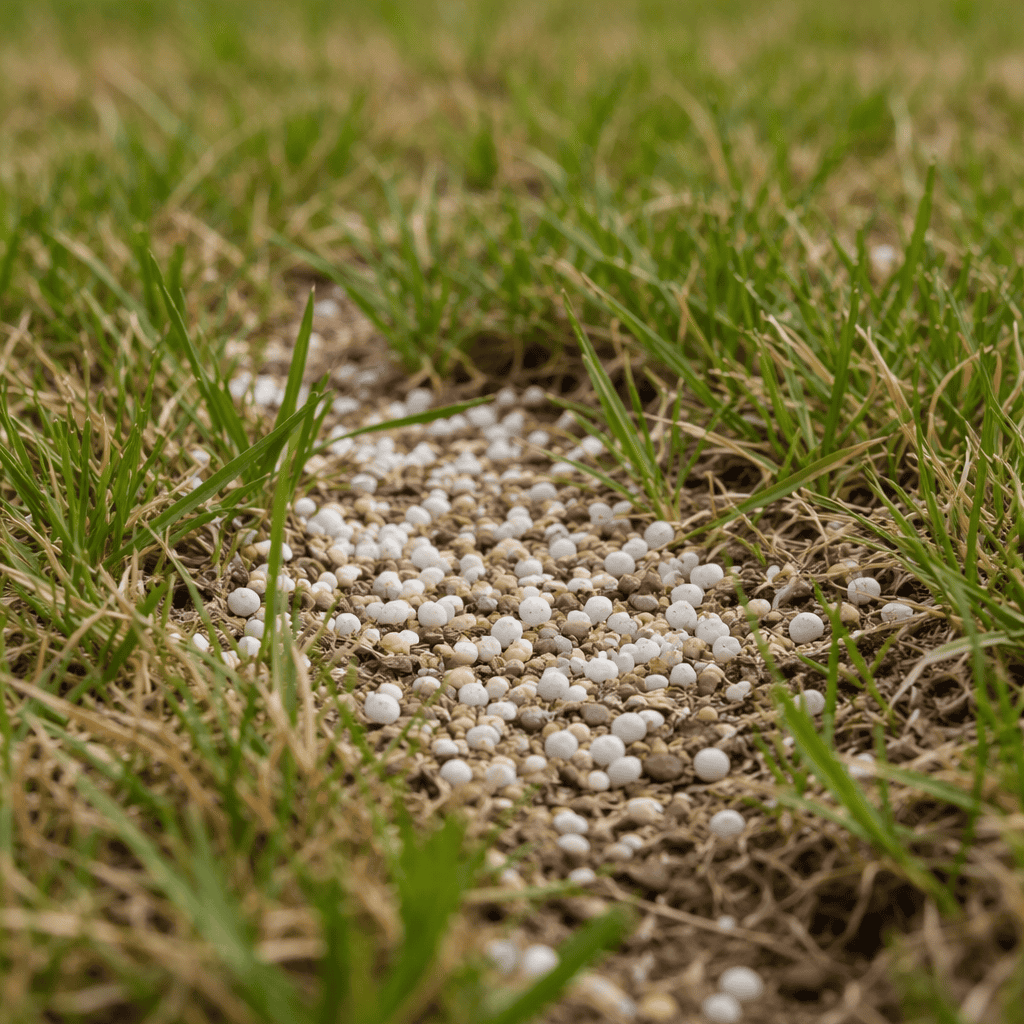

Lawn fertilization is the process of supplying grass with essential nutrients like nitrogen, phosphorus, and potassium to support healthy growth, root development, and overall turf strength. These nutrients help maintain consistent color, density, and recovery from stress. In Omaha, Nebraska and surrounding areas, fertilization plays a key role due to seasonal temperature swings, clay-heavy soils, and periods of heat and drought.
The Role of Nutrients in Lawn Growth
Grass relies on a steady supply of nutrients to grow and maintain its structure. The three primary nutrients used in lawn fertilization are nitrogen, phosphorus, and potassium, often referred to as N-P-K. Each plays a different role in how turf develops over time.
Nitrogen is responsible for leaf growth and green color. It supports the visible part of the lawn and helps maintain density. Phosphorus contributes to root development, which is especially important for establishing new grass and strengthening existing turf. Potassium supports overall plant resilience, helping grass tolerate stress from heat, cold, and foot traffic.
In Omaha lawns, where cool-season grasses like Kentucky bluegrass and fescue are common, these nutrients must be available at the right times to align with natural growth cycles.
How Fertilizer Interacts with Soil
Fertilizer does not work in isolation—it interacts with the soil environment. Soil composition, organic matter levels, and microbial activity all influence how nutrients are absorbed by grass roots.
In many Omaha-area lawns, soils tend to be compacted and contain higher clay content. This can limit water movement and reduce the availability of nutrients if the soil structure is not balanced. Organic matter and microbial activity help break down nutrients into forms that grass can absorb more easily.
Nutrient cycling is an important part of this process. Microorganisms in the soil convert organic materials into usable nutrients, supporting long-term soil health. Without this biological activity, fertilizers may not be used efficiently by the lawn.
Timing and Seasonal Growth Patterns
Fertilization follows the natural growth patterns of grass. Cool-season grasses, which are most common in Nebraska, grow most actively in the spring and fall. These periods are when nutrient uptake is most effective.
During the spring, lawns begin to recover from winter dormancy and require nutrients to support new growth. In the fall, fertilization helps strengthen root systems and prepare the lawn for winter conditions. Summer presents a different challenge, as heat stress can slow growth and reduce nutrient uptake.
Applying nutrients outside of these growth windows may not provide the same benefit, as grass may not be actively using the nutrients during periods of dormancy or stress.
Forms of Lawn Fertilizer
Lawn fertilizers come in different forms, primarily categorized as granular or liquid. Granular fertilizers are commonly used because they release nutrients over time, providing a steady supply. Liquid fertilizers can act more quickly but may require more frequent applications.
Fertilizers can also be classified based on how nutrients are released, including the differences between synthetic and organic fertilizers. Some provide immediate nutrient availability, while others release nutrients gradually as they break down in the soil. This release pattern influences how long nutrients remain available to the grass.
The choice of fertilizer type often depends on soil conditions, grass type, and seasonal timing, all of which affect how nutrients are absorbed and utilized.
The Importance of Soil Health in Fertilization
Healthy soil supports more efficient fertilization. Soil structure, organic matter, and biological activity all contribute to how well nutrients are retained and used by the lawn.
Compacted soil can limit root growth and restrict nutrient movement. Low organic matter reduces the soil’s ability to hold nutrients, which can lead to inconsistent growth. On the other hand, soil with balanced structure and active microbial life can support more stable nutrient availability.
In Omaha lawns, improving soil conditions often plays a role in how effective fertilization is over time. Practices that support soil biology can help maintain more consistent turf health.
Environmental Factors That Influence Fertilization
Weather and environmental conditions affect how fertilizers perform. Temperature, rainfall, and sunlight all play a role in nutrient availability and uptake.
Heavy rainfall can cause nutrients to move through the soil more quickly, while dry conditions may limit nutrient absorption due to reduced soil moisture. Temperature also affects microbial activity, which influences how nutrients are released from organic sources.
In the Midwest, fluctuating weather patterns can create variability in how lawns respond to fertilization. Understanding these conditions helps explain why results may differ from season to season.
How Lawn Fertilization Connects to Overall Lawn Care
Fertilization is one part of a broader lawn care approach. It works alongside practices like mowing, watering, and soil management to support consistent turf health.
For homeowners looking to better understand how nutrient-based programs fit into a complete lawn care approach, more context can be found on the Traditional Lawn Care page.
Fertilization alone does not determine lawn quality, but it plays an important role in supporting growth, recovery, and resilience when combined with other lawn care practices.
Why Do Some Lawns Respond Differently to Fertilizer?
Not all lawns respond to fertilization in the same way, even when similar nutrients are applied. Differences in soil composition, grass type, sunlight exposure, and moisture levels all influence how nutrients are used and what causes thin or weak grass.
For example, lawns with compacted soil may struggle to absorb nutrients efficiently, while lawns with higher organic matter may show more consistent growth. Shade can also limit how grass uses nutrients, as reduced sunlight affects photosynthesis.
In Omaha neighborhoods, it is common to see variations between lawns due to differences in soil conditions and landscape features. These factors help explain why fertilization results can vary even within the same area.