
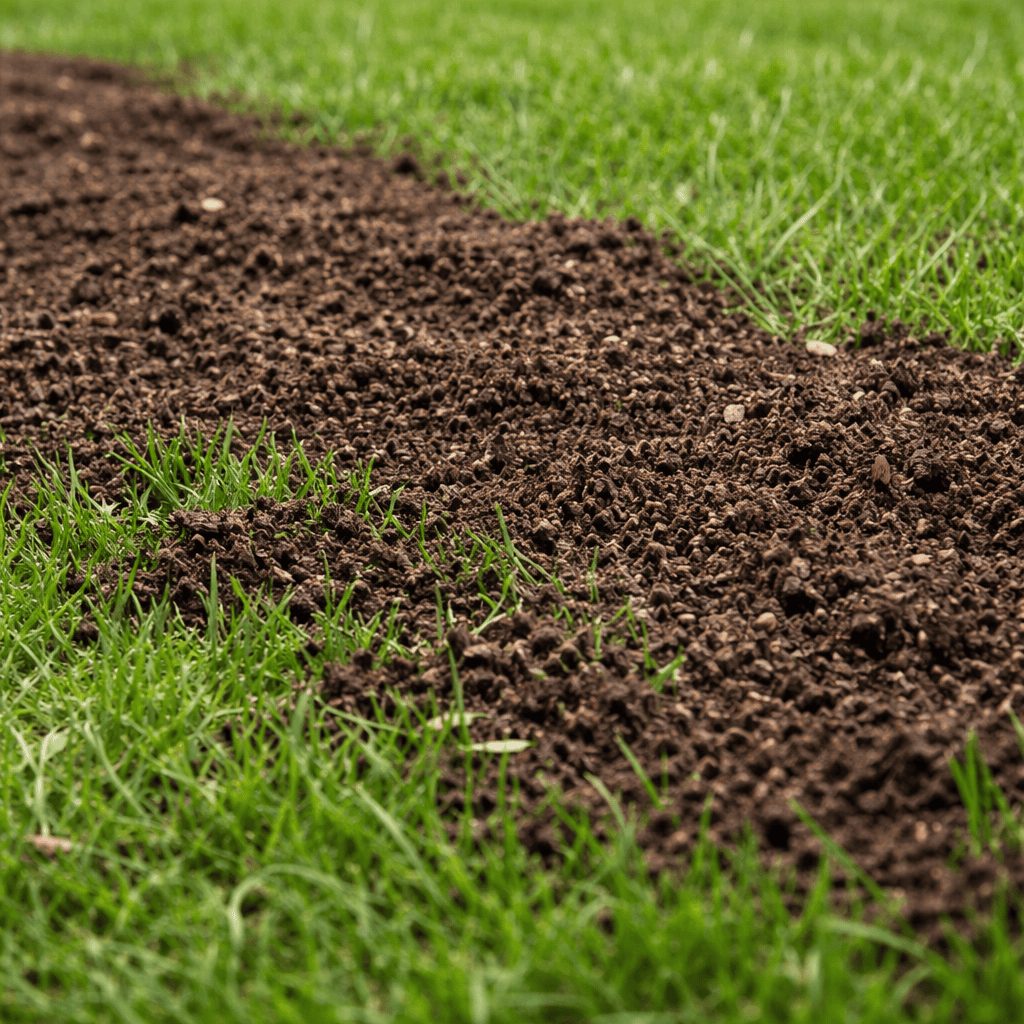

Topdressing a lawn is typically done one to two times per year, depending on soil condition, turf health, and overall lawn goals. The frequency of topdressing is influenced by factors such as organic matter levels, soil structure, and how actively the lawn is being improved. In Omaha, Nebraska and surrounding areas, seasonal weather patterns and soil composition often play a role in determining how often topdressing is beneficial.
Understanding What Topdressing Is Meant to Do
Topdressing involves applying a thin layer of organic material, such as compost, across the surface of a lawn to improve soil conditions. Rather than acting as a quick surface fix, it works gradually by supporting soil biology, increasing organic matter, and improving how the soil holds water and nutrients.
Because topdressing is a soil-focused practice, it is not something that needs to be repeated frequently in the same way as mowing or fertilization. Its impact builds over time as the organic material integrates into the soil and contributes to long-term lawn health.
Typical Topdressing Frequency for Most Lawns
For many residential lawns, topdressing is commonly done one to two times per year during the growing season when grass can actively respond. This spacing allows the organic material to gradually integrate into the soil without overwhelming the lawn surface.
Lawns that are being actively improved—such as those with compacted soil, low organic matter, or inconsistent growth—may benefit from two lighter applications spaced throughout the season. This approach supports steady soil improvement while allowing time for the material to break down and contribute to soil biology.
In lawns that are already performing well, topdressing may still be used once per year or less frequently as a way to maintain soil balance rather than actively change it. The goal is to support long-term soil health, not to apply material as often as possible.
How Soil Condition Affects How Often You Should Topdress
Soil condition is one of the most important factors in determining topdressing frequency. Lawns with poor soil structure, low microbial activity, or limited organic matter often benefit from more regular topdressing.
In many Omaha-area lawns, clay-heavy soils are common. These soils tend to compact easily, limiting root growth and reducing the movement of air, water, and nutrients. In these situations, annual topdressing can help gradually improve soil structure and create a better environment for root development.
As soil health improves—through increased organic matter and stronger biological activity—the need for frequent topdressing often decreases. Healthier soil becomes more self-sustaining, requiring less external input over time.
Seasonal Timing and Its Impact on Frequency
The time of year when topdressing is applied can influence how often it is needed. Topdressing is typically most effective during active growing periods, when grass can recover and integrate the material into the soil.
In cool-season grass regions like Omaha, this usually aligns with spring and fall. These seasons provide moderate temperatures and more consistent moisture, allowing grass to respond well without added stress.
If topdressing is done during less optimal conditions—such as extreme heat or drought—the results may be slower or less noticeable. This can sometimes lead homeowners to believe it needs to be repeated more often, when in reality, timing may be the limiting factor rather than frequency.
How Lawn Goals Influence Topdressing Frequency
Different lawn goals can also affect how often topdressing is applied. Homeowners focused on gradual soil improvement and long-term lawn health may choose a consistent annual schedule.
Others who are maintaining an already healthy lawn may use topdressing more occasionally, focusing on preserving soil balance rather than actively changing it.
For lawns that experience ongoing stress—such as heavy foot traffic, pet activity, or environmental pressure—more regular topdressing may help support recovery and maintain soil structure.
Regardless of the goal, topdressing is generally viewed as a long-term soil-building practice rather than a short-term correction.
What Happens If You Topdress Too Often?
Applying topdressing too frequently does not typically provide additional benefits and can sometimes disrupt the balance of the lawn if excessive material accumulates. Because topdressing is intended to be a thin layer that integrates into the soil, repeated applications in a short period may not fully break down before additional material is added.
This can limit airflow at the surface, interfere with grass growth, or create uneven conditions if not applied carefully. Allowing time between applications ensures that the soil has the opportunity to absorb and benefit from the organic material.
A measured approach—based on soil condition and lawn response—is generally more effective than frequent applications.
How Do You Know When Your Lawn Needs Topdressing Again?
One way to determine topdressing frequency is by observing how the lawn responds over time. Lawns with improved density, stronger root systems, and more consistent growth may not require frequent applications.
Signs that a lawn may benefit from topdressing include compacted soil, poor drainage, uneven growth, or reduced vigor. These conditions often indicate that the soil could benefit from additional organic support.
In Omaha and surrounding areas, seasonal stress—such as hot summers or fluctuating moisture levels—can also reveal underlying soil limitations that topdressing can help address over time.
Does Topdressing Replace Other Lawn Practices?
Topdressing is a supportive practice that works alongside other lawn care approaches rather than replacing them. While it improves soil conditions, it does not substitute for practices like proper mowing, watering, or seasonal lawn care.
In many cases, topdressing is used as part of a broader approach to improving lawn health. Homeowners looking to better understand how soil-focused practices fit into a full lawn strategy can explore more about Topdressing with Compost and how it supports overall turf development.
Why Topdressing Is Considered a Long-Term Practice
Topdressing is not designed to deliver immediate visual changes. Instead, it works gradually by improving the soil environment beneath the grass. As organic matter builds and microbial activity increases, the lawn becomes more resilient and consistent over time.
Because these changes happen below the surface, the benefits of topdressing are often seen in how the lawn performs over multiple seasons rather than immediately after application.
This long-term effect is why topdressing is typically spaced out over time rather than applied frequently. Consistency, rather than frequency, is what leads to lasting improvement.