
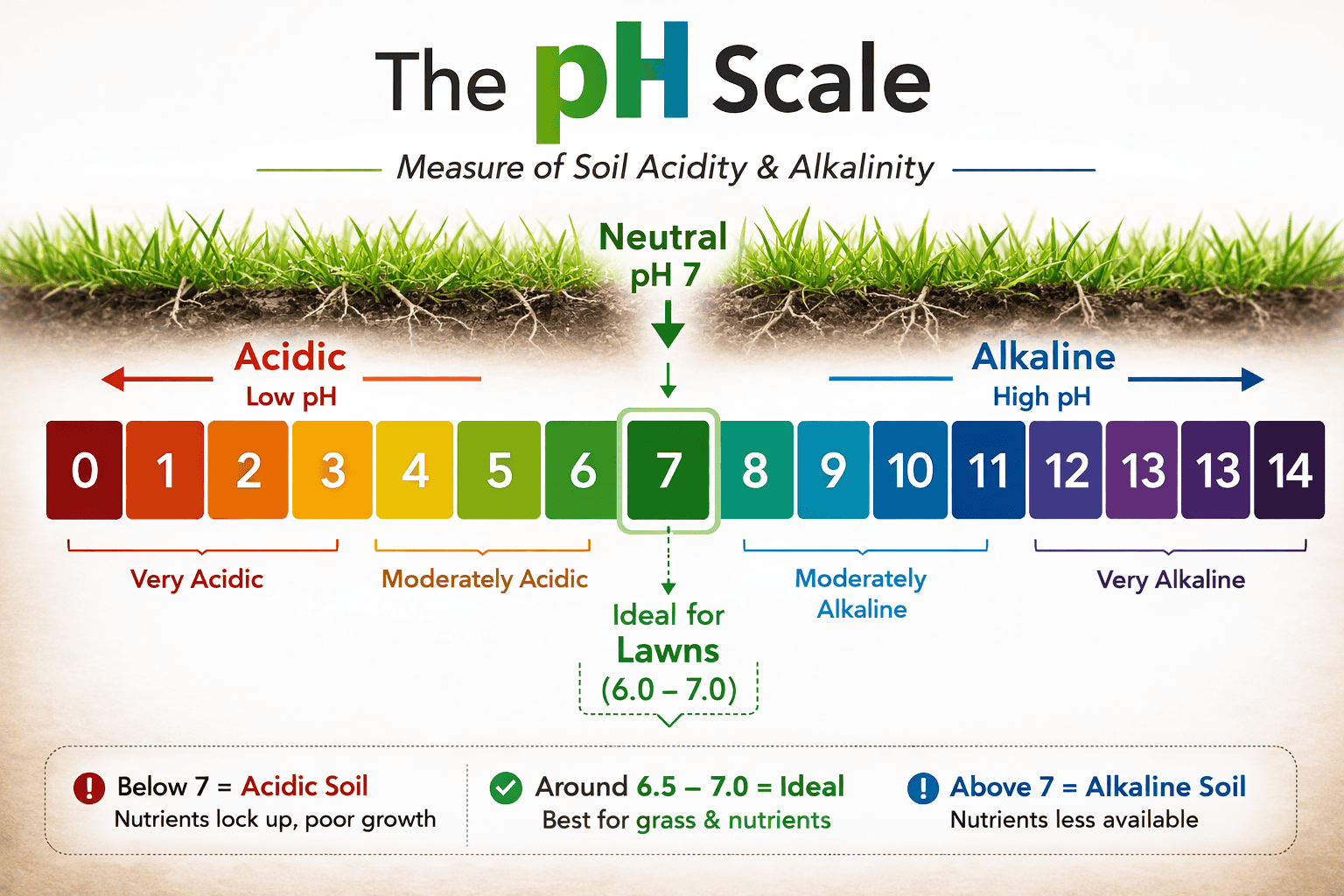

Soil pH refers to the measurement of how acidic or alkaline soil is, using a scale that ranges from 0 to 14. This measurement helps determine how easily grass roots can absorb nutrients from the soil. In Omaha, Nebraska and surrounding areas, rainfall patterns and soil composition can gradually shift soil toward more acidic conditions, which can influence long-term lawn health.
What Soil pH Means for Lawn Growth
The pH scale measures the balance between acidity and alkalinity in soil. A reading of 7 is considered neutral, meaning the soil is neither acidic nor alkaline. Numbers below 7 indicate acidic soil, while numbers above 7 indicate alkaline soil.
For most turfgrass varieties commonly found in the Midwest, soil conditions that are slightly acidic tend to support stable growth and nutrient availability. When soil moves too far toward either end of the pH scale, nutrients in the soil may become more difficult for grass roots to absorb. Even when nutrients are present in the soil, plants may struggle to use them efficiently if pH levels are outside a healthy range.
Because soil chemistry influences nutrient availability, soil pH is closely connected to several important aspects of lawn biology, including microbial activity, nutrient cycling, and root development within the soil food web in lawns. When soil conditions are balanced, these natural processes work together to support steady turf growth.
How Rainfall Influences Soil Acidity in the Midwest
Weather patterns play a significant role in shaping soil conditions over time. In the Midwest, seasonal rainfall can slowly alter soil chemistry by washing certain minerals deeper into the ground.
As rainfall moves through the soil, minerals such as calcium and magnesium may gradually be leached away. These minerals normally help buffer soil against acidity. When they become depleted, soil can slowly shift toward a more acidic condition.
This process tends to occur gradually over several years, which is why lawns that once grew well may eventually begin showing signs of stress without obvious changes above the surface. Soil testing is one of the ways homeowners and lawn professionals learn how these long-term changes may be affecting turfgrass growth.
Understanding the Soil pH Scale
The pH scale ranges from 0 to 14 and helps describe the chemical balance of soil.
• Numbers below 7 indicate acidic soil
• A value of 7 represents neutral soil
• Numbers above 7 indicate alkaline soil
Each step on the pH scale represents a significant change in soil chemistry. Even small differences in pH can influence how nutrients behave in the soil.
When soil becomes too acidic, nutrients such as nitrogen, phosphorus, and potassium may not dissolve in forms that grass roots can easily absorb, which is one factor discussed when explaining the difference between organic and synthetic fertilizers. As a result, lawns may struggle even when fertilizers or soil amendments are present.
Balanced soil conditions allow nutrients to move through the soil environment more effectively, supporting healthy turf growth and stronger root systems.
Signs That Soil pH May Be Out of Balance
Because soil chemistry affects many biological processes in the lawn, imbalanced pH levels can sometimes show up as broader turf health issues.
In some cases, lawns experiencing soil imbalance may show signs such as increased weed pressure, disease activity, or insect stress. While these issues can have multiple causes, soil chemistry is one of the environmental factors that can influence how resilient turfgrass is to outside pressures.
Healthy soil supports beneficial microbial activity and nutrient cycling, both of which contribute to stronger turfgrass systems. When soil conditions drift away from the optimal range, grass may become less efficient at using nutrients and maintaining consistent growth.
Understanding soil pH can therefore provide important insight into what may be happening below the surface of the lawn.
Why Soil Testing Helps Identify Lawn Conditions
Soil testing provides a way to measure pH levels and better understand the chemical environment surrounding grass roots. Rather than relying on visible symptoms alone, soil analysis helps identify whether acidity or alkalinity may be influencing lawn performance.
A soil test typically evaluates several characteristics, including pH level and the availability of key nutrients within the soil profile. This information can help explain why some lawns respond differently to fertilization or seasonal conditions.
Homeowners who want to better understand soil conditions in their lawn often begin by learning how soil chemistry affects nutrient movement, organic matter breakdown, and root development. Those interested in the broader soil-focused approach to lawn health can learn more through organic lawn care.
How Balanced Soil Supports Healthy Turfgrass
Balanced soil conditions allow nutrients, microorganisms, and grass roots to interact more efficiently. When soil chemistry falls within a healthy range, several natural processes tend to function more consistently.
Microbial organisms in the soil help break down organic matter and release nutrients that grass can use for growth. This biological activity contributes to nutrient cycling, soil structure, and overall lawn stability.
When soil conditions support these natural processes, lawns may develop stronger root systems and more consistent turf density over time. Balanced soil also allows fertilizers and other nutrients already present in the soil to function more effectively.
Because soil health plays such a central role in lawn performance, maintaining appropriate soil chemistry is an important part of understanding long-term lawn care.
How Soil Health Connects to Overall Lawn Performance
Lawn health depends on a complex relationship between soil biology, nutrient availability, and environmental conditions. Soil pH is one of the foundational factors that influences how these elements work together.
In regions such as Omaha, Nebraska and surrounding areas, lawns often experience seasonal stresses related to temperature swings, rainfall patterns, and soil composition. When soil conditions support healthy biological activity and nutrient movement, turfgrass may be better equipped to handle these natural fluctuations.
Understanding soil chemistry provides homeowners with a clearer picture of how their lawn environment functions. By recognizing how soil pH influences nutrient availability, root growth, and microbial activity, it becomes easier to understand the underlying factors that support healthy turfgrass.