
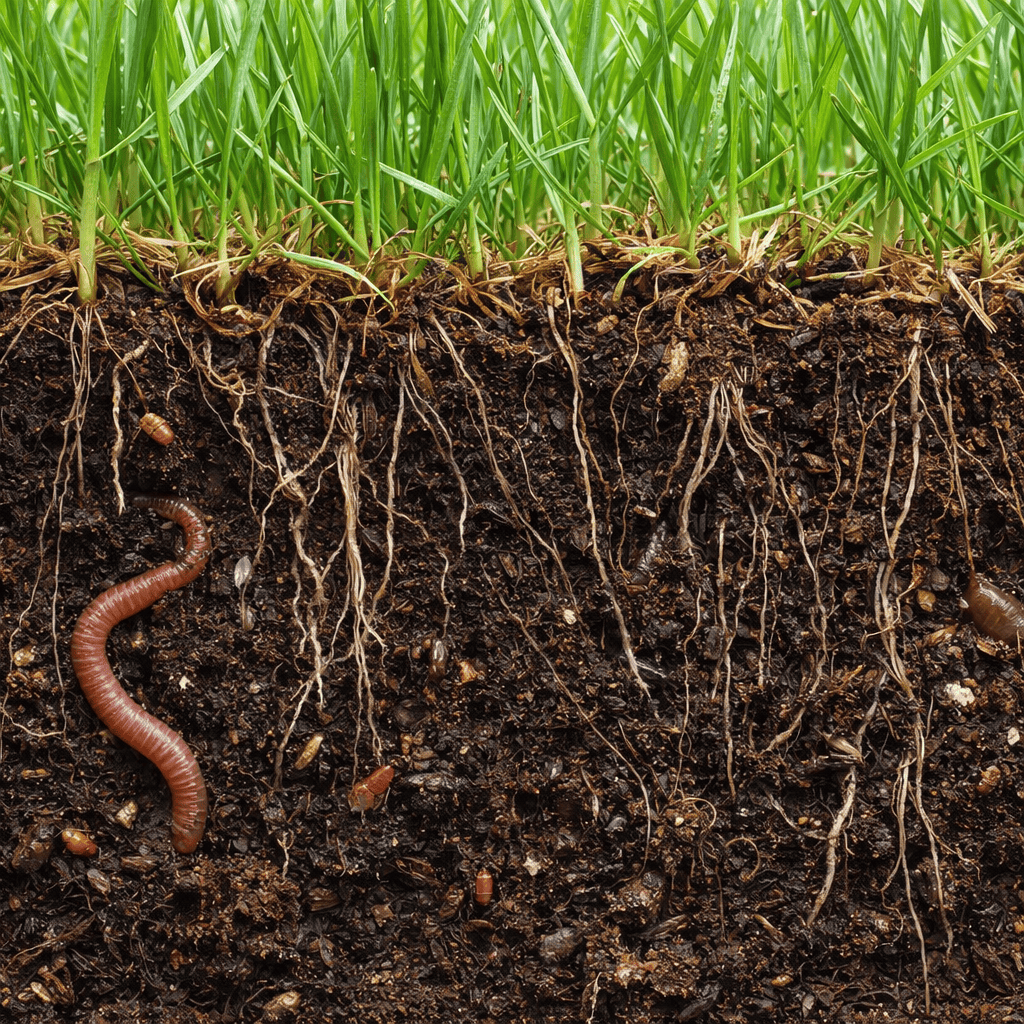

An organic lawn is supported by a complex living ecosystem beneath the soil surface where microorganisms, insects, fungi, and organic matter interact to support turf growth. This underground biological network helps cycle nutrients, build soil structure, and support healthy plant development. In regions like Omaha, Nebraska and surrounding areas, the health of this soil ecosystem plays an important role in how lawns respond to weather, foot traffic, and seasonal stress.
Life Beneath the Surface of Your Lawn
What happens beneath the soil has a direct influence on what grows above it. Healthy soil contains a diverse community of organisms that work together in a natural cycle. Earthworms, beetles, fungi, bacteria, and other microorganisms all contribute to breaking down organic matter and releasing nutrients that turfgrass roots can absorb.
These organisms help improve soil structure as they move through the soil and process organic material. Their activity creates small channels that allow water and oxygen to move more easily through the soil. When soil structure improves, grass roots are able to grow deeper and access nutrients more effectively.
This living soil system supports natural processes such as nutrient cycling, microbial activity, and organic matter decomposition. Together, these processes contribute to stronger turf growth and improved resilience during periods of heat, drought, or heavy rainfall.
The Soil Ecosystem and Turf Growth
A lawn is not just grass growing in dirt. It is a small ecosystem made up of plant roots, soil organisms, moisture, air spaces, and organic matter. When these components work together, the soil environment becomes more supportive of healthy turf growth.
Microorganisms play an especially important role in this system. Bacteria and fungi break down organic materials such as fallen leaves, grass clippings, and natural amendments. As these materials decompose, nutrients become available for grass plants to use.
At the same time, beneficial insects and soil organisms help maintain balance within the soil environment. Some organisms consume decaying plant material, while others feed on microorganisms or other insects as part of the soil food web. This natural cycle helps regulate the biological activity occurring beneath the surface.
Balance Within the Soil Food Web
Not every organism living in the soil is beneficial to turfgrass. However, the presence of a wide variety of organisms often helps maintain a natural balance.
Some organisms that might appear harmful can actually play a role in supporting the broader ecosystem. Predatory insects, microbes, and fungi often help regulate populations of other organisms within the soil food web in lawns. This interaction helps keep biological activity balanced over time.
The concept is similar to what occurs in many natural environments. Diversity within an ecosystem often allows natural checks and balances to develop. When soil biology remains active and diverse, the soil environment is better able to support long-term turf health.
Organic Matter and Soil Health
Organic matter is a key component of healthy soil. It consists of decomposed plant material, microbial byproducts, and other natural residues that accumulate in the soil over time.
As organic matter breaks down, it improves several important soil characteristics. It increases the soil’s ability to hold moisture, supports microbial populations, and helps maintain stable soil structure. These conditions allow turfgrass roots to grow more deeply and access nutrients more efficiently.
In many Midwestern lawns, including those found throughout the Omaha area, soil compaction and low organic matter can limit turf performance. Over time, practices that support soil biology and organic matter development can gradually improve soil conditions.
Homeowners who want to understand how soil-focused lawn programs relate to long-term turf health can learn more about Organic Lawn Care and how soil-based approaches support healthy lawn ecosystems.
Why Soil Biology Matters for Lawn Health
Soil biology plays an important role in how lawns respond to environmental conditions. A biologically active soil environment can help improve the movement of water, air, and nutrients through the root zone.
When microorganisms process organic material, they release nutrients that turfgrass can use for growth. At the same time, improved soil structure allows roots to expand more freely, which can improve the lawn’s ability to tolerate heat and dry conditions.
Healthy soil biology also supports nutrient cycling, meaning nutrients move through the soil system naturally as organisms break down organic matter and release plant-available nutrients. This process is an important part of maintaining long-term soil productivity.
How Midwest Climate Influences Lawn Soil
The climate patterns in Omaha and surrounding areas influence how lawn soil functions throughout the year. Seasonal temperature swings, spring rainfall, summer heat, and winter freeze cycles all affect soil biology and turf growth.
Heavy spring rains can move nutrients through the soil profile, while summer heat can slow microbial activity if soil becomes too dry. During cooler fall months, microbial activity often increases again as organic materials such as leaves and grass clippings begin to break down.
Because soil conditions change throughout the seasons, maintaining a healthy soil ecosystem is an ongoing process influenced by climate, soil composition, and turf management practices.
Is Organic Lawn Care Really About the Soil?
Organic lawn care is often associated with natural inputs and reduced reliance on synthetic products, but its underlying focus is usually on supporting soil health and biological activity. The idea is that when soil conditions improve, the lawn environment becomes more supportive of long-term turf growth.
Rather than focusing only on feeding the grass plant itself, soil-centered approaches emphasize the role of microorganisms, organic matter, and nutrient cycling within the soil ecosystem. These biological processes help sustain the environment where turfgrass roots grow.
Understanding the natural relationships between soil organisms, organic matter, and plant growth can help explain why soil health is frequently discussed when people talk about organic lawn care systems and how organic fertilizer affects the environment.