

Ticks are parasitic arachnids that survive by feeding on the blood of animals and humans, often settling in areas that explain where ticks tend to live in a yard. These small pests often live in grasses, wooded edges, and natural landscape areas where they can attach to passing hosts. In Omaha, Nebraska and surrounding areas, seasonal weather patterns and backyard wildlife can create conditions that allow ticks to appear in residential outdoor spaces.
Why Ticks Can Be a Concern Around Homes
Ticks are widely known because of their role in transmitting certain illnesses between animals and humans. When a tick feeds on an infected host, it may carry disease-causing organisms that can later be passed to another animal or person during a future feeding.
Some of the illnesses associated with tick exposure include:
Lyme disease
Rocky Mountain spotted fever
Anaplasmosis
Babesiosis
Tularemia
Ehrlichiosis
Powassan virus
Heartland virus
Southern Tick-Associated Rash Illness (STARI)
Not every tick carries disease, but understanding how ticks spread illnesses helps explain why awareness and prevention are often discussed when people spend time outdoors.
Ticks transmit disease because they feed on blood to survive. When a tick attaches to a host, it uses specialized mouthparts to access the bloodstream. If the tick previously fed on an infected animal, pathogens can be transferred during the feeding process.
The Tick Life Cycle
Ticks develop through four distinct life stages, and the entire life cycle can take several years to complete depending on environmental conditions.
Egg
The tick life cycle begins when adult female ticks lay eggs in protected outdoor environments such as soil, leaf litter, or dense vegetation. A single female tick can lay thousands of eggs.
Larva
Once the eggs hatch, ticks enter the larval stage. These young ticks have six legs and must find a host to take their first blood meal. Small animals such as rodents or birds commonly serve as hosts at this stage.
Nymph
After feeding, the tick develops into the nymph stage, where it has eight legs and begins seeking larger hosts. Nymphs are very small and often difficult to detect, which is one reason they are frequently associated with disease transmission.
Adult
Adult ticks continue the cycle by feeding on larger mammals such as deer, pets, or humans. After feeding, female ticks lay eggs and the process begins again.
Because ticks must feed during multiple stages of development, they may encounter different hosts throughout their life cycle. This interaction with various animals contributes to their ability to carry and spread certain diseases.
Where Ticks Are Commonly Found in Residential Areas
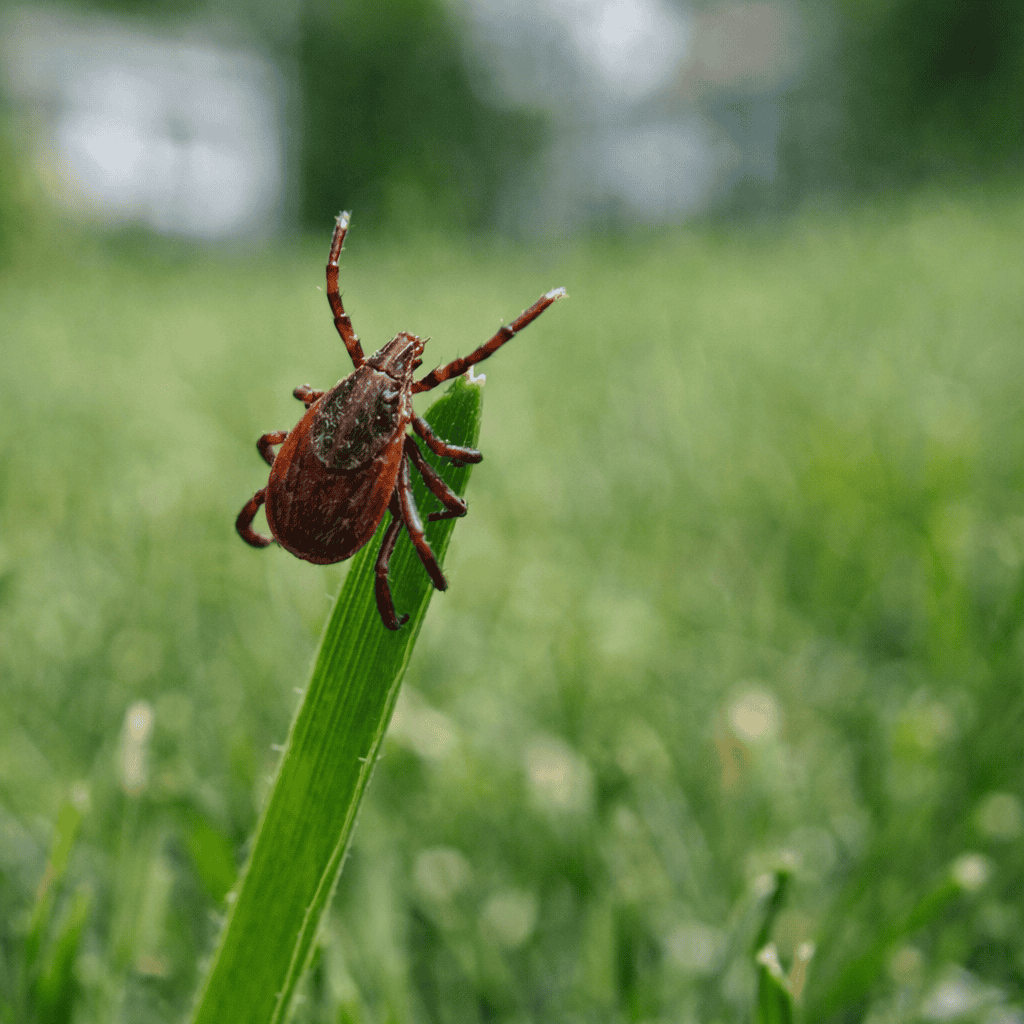
Ticks typically live in environments where they can easily attach to passing hosts. They do not fly or jump. Instead, they rely on a behavior known as “questing.”
While questing, ticks climb onto grasses, leaves, or low vegetation and extend their front legs outward. When a person or animal brushes against the vegetation, the tick can quickly latch on and begin searching for a place to feed.
Several common backyard features may create conditions where ticks are more likely to appear, which is closely tied to what attracts ticks into residential yards:
Tall grasses or unmaintained vegetation
Wooded property edges
Leaf litter or dense ground cover
Wildlife travel paths
Areas where pets frequently roam
In the Omaha region, seasonal weather patterns can also influence tick activity. Warmer temperatures and increased humidity during late spring and summer often support higher tick activity levels.
Wildlife and Pet Exposure
Ticks frequently move through residential environments by attaching to animals that travel through yards. Wildlife such as rabbits, squirrels, deer, and other small mammals may carry ticks from wooded or natural areas into nearby lawns.
Pets can also pick up ticks when exploring outdoor areas, especially along fence lines, tree lines, or landscape edges where vegetation is thicker. Because ticks feed on blood, they naturally seek hosts that pass through these environments.
Once a tick attaches to a host, it may remain feeding for several hours or even days depending on the species and life stage.
How to Reduce the Risk of Tick Exposure
Because ticks rely on contact with hosts, reducing exposure often involves awareness and simple preventive habits when spending time outdoors.
One of the most important habits is checking for ticks after outdoor activity. Since ticks may take time to locate a feeding location, early removal can prevent attachment.
Common prevention habits include:
Checking clothing and skin after outdoor activity
Showering soon after being outside
Using a lint roller on clothing after yard work or outdoor play
Checking pets for ticks after time outside
Removing ticks promptly also reduces the likelihood of disease transmission. If a tick is discovered on the skin, it can be carefully removed using fine-tipped tweezers. The goal is to grasp the tick close to the skin and pull upward steadily.
After removal, the area can be cleaned with soap and water or rubbing alcohol.
Why Tick Awareness Matters for Outdoor Living
Many people in Omaha enjoy spending time outdoors during the warmer months, whether relaxing in the backyard, gardening, or playing with pets and children. Because ticks are part of many natural ecosystems, awareness helps homeowners take reasonable precautions while still enjoying outdoor spaces.
Understanding where ticks live, how they behave, and how they feed allows homeowners to make informed decisions about outdoor safety. Knowledge of tick habitats, life cycles, and seasonal activity patterns can help reduce the chances of unexpected encounters.
Homeowners who want to learn more about approaches commonly used for managing backyard pest activity can explore additional information about Flea & Tick Defense.
Why Do Ticks Wait on Grass and Vegetation?
Ticks use vegetation as a strategic place to find hosts. Because they cannot fly or jump, climbing onto leaves, stems, or tall grass allows them to encounter passing animals more easily.
This behavior is known as questing. During questing, ticks grip vegetation with their back legs while extending their front legs outward. These front legs contain sensory organs that help detect body heat, carbon dioxide, and movement from nearby hosts.
When a host brushes against the vegetation, the tick quickly attaches and begins searching for a suitable feeding site. This strategy allows ticks to efficiently locate hosts even though they have limited mobility.