
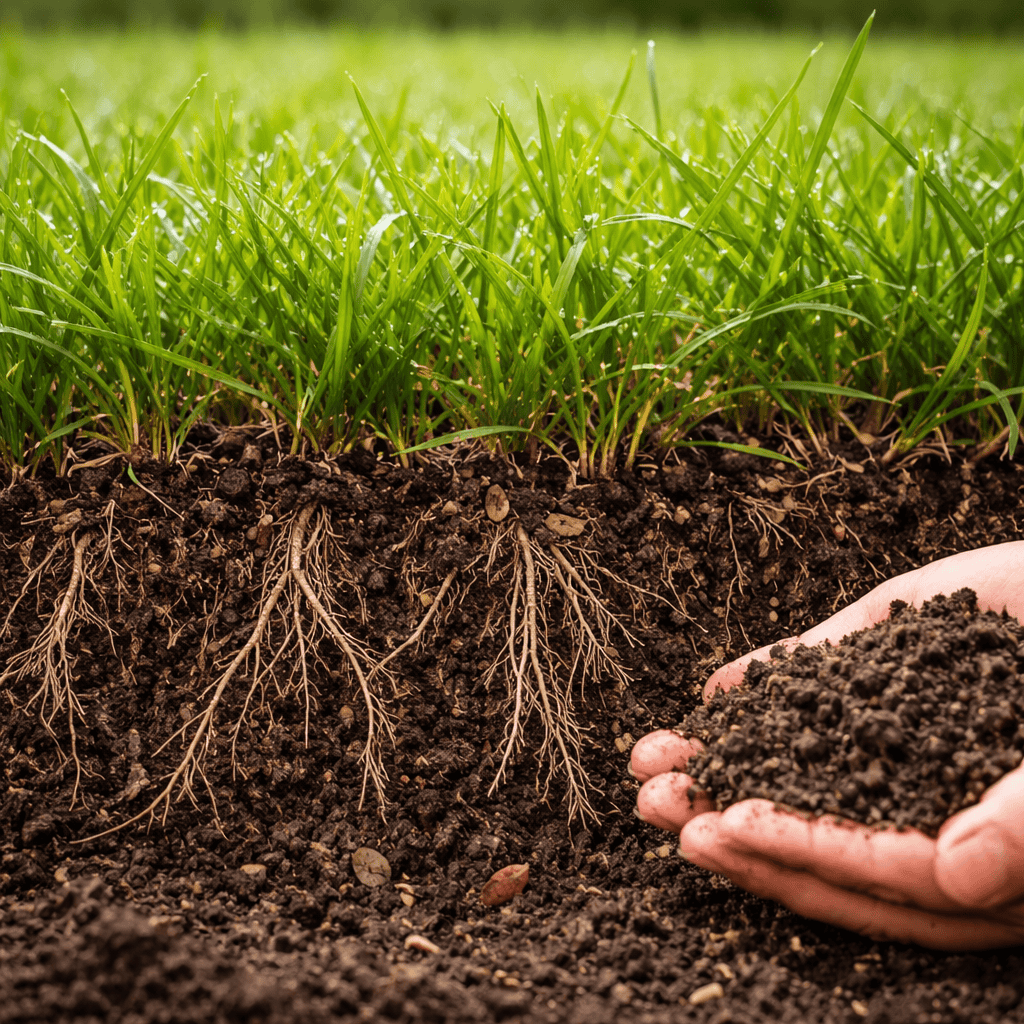

Organic lawn care refers to an approach to maintaining healthy turfgrass by focusing on soil biology, natural nutrient sources, and ecological balance rather than relying primarily on synthetic fertilizers or chemical pesticides. Instead of concentrating only on feeding the grass directly, organic lawn care emphasizes improving the soil environment so turf can grow stronger and more resilient over time.
In Omaha, Nebraska and surrounding areas, where seasonal weather swings and soil conditions influence lawn performance, understanding how organic lawn care works can help homeowners make more informed decisions about caring for their landscapes and exploring professional organic lawn care services in Omaha.
Understanding What “Organic” Means in Lawn Care
The word “organic” can have several meanings depending on the context. In lawn care discussions, it generally refers to materials and practices that originate from natural biological sources such as plant matter, composted organic materials, or other naturally derived inputs.
These materials interact with the soil differently than many manufactured fertilizers. Instead of delivering nutrients in a form that becomes immediately available to plants, organic materials contribute to the soil ecosystem as they gradually decompose.
As these materials break down, they become part of the soil’s organic matter. This process supports microbial activity within the soil and allows nutrients to move through the soil ecosystem in a gradual and biologically mediated way. Because of this, the concept of organic lawn care is often closely tied to soil biology, microbial activity, and the long-term improvement of soil conditions.
How Organic Lawn Care Works
Organic lawn care focuses on improving the underlying soil environment so grass plants can thrive naturally. Instead of emphasizing quick nutrient delivery directly to the grass blade, organic approaches concentrate on strengthening the soil ecosystem that supports turf growth.
Healthy soil contains organic matter, beneficial microbes, fungi, and other living organisms that help break down natural materials into plant-available nutrients. This process is often referred to as nutrient cycling.
Through nutrient cycling, organic materials are gradually converted into forms that grass plants can absorb. As a result, lawns receive nutrients more steadily rather than through sudden spikes of plant-available fertilizer.
When soil biology functions properly, grass roots are better able to absorb water and nutrients. Over time, this can lead to stronger turf density and improved resilience against common lawn stresses such as drought, heat, or foot traffic.
How Organic Lawn Care Differs From Conventional Lawn Programs
Many conventional lawn care programs focus primarily on delivering nutrients directly to turfgrass using manufactured fertilizer products, which highlights the organic vs synthetic fertilizer differences often discussed in lawn care. These fertilizers are designed to supply nutrients such as nitrogen, phosphorus, and potassium in forms that plants can absorb quickly.
Organic lawn care approaches the lawn from a broader soil perspective. Instead of focusing only on delivering nutrients directly to the grass, the emphasis is placed on improving the soil environment where nutrients are processed and made available.
Organic inputs can increase the amount of organic matter in the soil and support the activity of soil microorganisms. These microorganisms help break down organic materials and convert them into plant-available nutrients through natural biological processes.
Because nutrients move through the soil differently under these conditions, discussions about organic lawn care frequently focus on soil development, nutrient cycling, and biological activity rather than immediate changes in turf appearance.
Why Soil Health Is Central to Organic Lawn Care
Healthy lawns are closely connected to the condition of the soil beneath them. Soil provides physical support for grass roots while also functioning as the environment where water, nutrients, air, and living organisms interact.
Organic lawn care discussions often emphasize soil health because soil organisms play a key role in nutrient availability. Microbes, fungi, and beneficial bacteria break down organic materials and transform them into nutrients that plant roots can absorb.
As organic matter accumulates in the soil, it can influence soil structure by helping soil particles form stable aggregates. These structural changes can affect how water moves through the soil, how air circulates around roots, and how easily turfgrass roots can grow.
Over time, these biological and structural changes in the soil contribute to the stability and resilience of the turfgrass growing above it.
The Soil Food Web and Lawn Health
Soil is a living environment that contains an enormous variety of microscopic organisms that form a complex biological network. Bacteria, fungi, protozoa, and other microbes interact continuously with plant roots and organic matter within the soil.
This biological community is often referred to as the soil food web, a concept explained in more detail when discussing the soil food web in your lawn. As organic materials decompose, microbes break them down and release nutrients into the soil through nutrient cycling.
These biological interactions help regulate how nutrients move through the soil and how they become available to turfgrass roots. Organic matter also helps maintain moisture balance within the soil and supports the microbial populations that contribute to overall soil health.
Because of this relationship between soil organisms and plant growth, organic lawn care concepts frequently highlight the role of biology in maintaining a balanced and functioning soil system.
Environmental Factors That Influence Lawn Care
Environmental conditions also play a role in how lawn care materials interact with the surrounding landscape. Rainfall, irrigation, and runoff can influence how substances move through soil and water systems.
For example, heavy rainfall or flooding events in parts of the Midwest have drawn attention to how fertilizers, pesticides, and other materials applied outdoors may move into nearby storm drains or waterways.
In the Omaha region, where spring storms and seasonal rainfall patterns are common, runoff patterns are an important environmental consideration. While lawn care products are regulated, these environmental factors sometimes lead homeowners to explore lawn care approaches that focus on soil health and biological processes rather than heavy reliance on chemical inputs.
Organic Lawn Care in Omaha, Nebraska
Regional climate conditions influence how lawns grow and how soil processes function throughout the year. In Omaha, Nebraska and surrounding communities, lawns experience significant seasonal variation, including cold winters, warm summers, and periods of fluctuating rainfall.
These environmental patterns affect how quickly organic materials break down in the soil and how actively soil organisms function during different parts of the growing season.
Turfgrass species commonly found in the region, such as Kentucky bluegrass and tall fescue, also respond to seasonal changes in temperature and moisture. Soil structure, organic matter levels, and microbial activity can all influence how lawns respond to seasonal stress and changing weather conditions.
Because of these factors, discussions about organic lawn care in eastern Nebraska often include how soil conditions interact with local climate patterns and long-term turf health.
Does Organic Lawn Care Mean Chemical-Free?
A common question homeowners ask is whether organic lawn care means a lawn is completely free of chemicals. In practice, the term organic refers primarily to the origin of the materials used and how they interact with soil biology rather than the complete absence of chemical compounds.
All substances, whether natural or synthetic, are composed of chemical elements. What distinguishes organic lawn care materials is that they are typically derived from biological sources and interact with soil systems through decomposition and microbial activity.
These materials often release nutrients gradually as soil organisms break them down. Because of this slower nutrient release pattern, organic lawn care discussions frequently emphasize soil activity and nutrient cycling rather than immediate plant response.
The Long-Term Perspective of Organic Lawn Care
Organic lawn care is often described as a long-term approach to managing turfgrass. Rather than focusing primarily on short-term changes in lawn appearance, the emphasis is placed on gradually improving the soil environment that supports grass growth.
As soil organic matter increases and microbial populations develop, the soil system can become more efficient at processing nutrients and maintaining stable growing conditions for turfgrass.
Over multiple growing seasons, the relationship between soil biology, organic matter, and turf growth becomes more noticeable. Lawns growing in stable soil environments often develop stronger root systems and improved resilience to changing environmental conditions.
For many homeowners, understanding what organic lawn care means begins with recognizing that lawn health is closely connected to the condition of the soil beneath it and the biological processes occurring within that soil over time.