
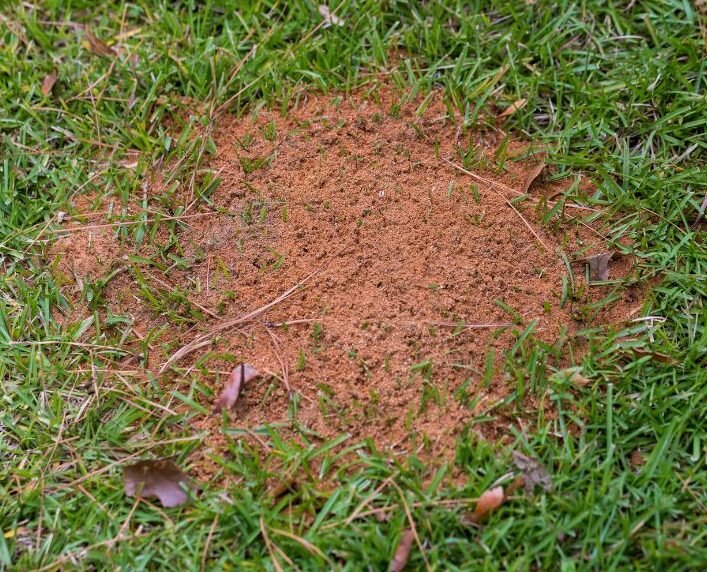

Ants appear in lawns when the soil, moisture levels, and food sources create conditions that support colony growth. These insects build underground tunnel systems that allow them to move through soil, gather food, and establish nesting areas. In residential lawns across Omaha, Nebraska and surrounding areas, summer warmth and soil activity often create ideal conditions for ant colonies to expand.
Why Ants Choose Lawns as Nesting Areas
Lawns can provide many of the basic resources ants need to survive. Soil offers protection for their colonies, while nearby food sources help sustain the population. Ants typically build underground nests with small openings that appear as mounds or anthills on the surface, similar to where insects tend to live in a yard.
Healthy soil naturally contains insects and microorganisms, but ants are especially good at adapting to residential landscapes. Turfgrass areas, landscape edges, sidewalks, and patios often provide small gaps in the soil where ants can establish colonies.
Once a colony settles into an area, worker ants travel outward to gather food. They leave behind scent trails called pheromones that guide other ants back to the same food source. This is why homeowners often notice long lines of ants traveling across patios, driveways, or lawn areas.
Common Lawn Conditions That Attract Ants
Several environmental factors can make a lawn more attractive to ants, similar to what tends to attract pests to a lawn. These conditions do not necessarily mean the lawn is unhealthy, but they can create opportunities for ants to build nests.
Moisture is one of the most important factors. Ants often settle in areas where soil stays slightly damp, such as near irrigation lines, birdbaths, downspouts, or shaded turf. Water sources allow colonies to remain active during hot summer weather.
Food availability also plays a role. Ants feed on a wide variety of materials including sugary substances, plant secretions, and small insects. Food scraps left outdoors, pet food bowls, or improperly sealed trash bags can attract ants and encourage them to expand their foraging areas into the lawn.
Soil structure may also influence colony development. Loose or sandy soil is easier for ants to excavate than compacted ground. In many Midwestern lawns, seasonal soil changes can create ideal digging conditions during the warmer months.
How Ant Colonies Affect Lawn Soil
Ant colonies are built through networks of underground tunnels that allow ants to move freely beneath the turf surface. As they dig, ants bring soil particles to the surface, forming small mounds that are commonly known as anthills.
These mounds can become noticeable in lawns because they interrupt the smooth surface of the turf. While the soil movement caused by ants is part of natural ecosystem activity, large or numerous mounds can create uneven areas in the lawn.
The tunneling activity may also change how water moves through the soil. In some cases, ant tunnels improve drainage by creating pathways for water and air. In other situations, excessive colony activity can disturb the root zone of the grass.
For homeowners in Omaha and nearby communities, ant activity tends to increase during the warmest parts of the growing season when soil temperatures rise and insect populations become more active.
Ways Homeowners Can Reduce Ant Activity
Reducing ant populations often begins by addressing the conditions that attract them in the first place. Because ants rely on food, water, and shelter, removing these resources can make a lawn less appealing for colony expansion.
Standing water should be minimized whenever possible. Checking irrigation patterns, fixing leaking outdoor faucets, and keeping birdbaths clean can help limit excess moisture in the yard.
Food sources should also be managed carefully. Outdoor trash containers should remain sealed, and pet food bowls should not be left outside for extended periods. Even small food particles can attract ants if they are consistently available.
Maintaining a balanced landscape environment may also help reduce ant activity. Healthy turfgrass, consistent mowing, and proper soil care can help keep the lawn environment stable and less attractive to large insect colonies.
Homeowners interested in learning more about how broader lawn health practices influence insect activity can explore the educational concepts behind Flea & Tick Defense programs that address pest activity in outdoor environments.
Natural Substances That Ants Tend to Avoid
Many homeowners experiment with natural substances that ants find unpleasant. Certain scents and plant-based compounds may disrupt the pheromone trails ants rely on for communication.
Common household ingredients such as vinegar, citrus oils, mint, and pepper are sometimes used around patios or landscape edges. These substances work primarily as repellents rather than colony-eliminating solutions.
Because these materials do not typically destroy the nest itself, ants may return once the scent fades. For this reason, natural deterrents are often used as short-term strategies around high-traffic areas such as sidewalks, patios, and outdoor seating spaces.
Why Ant Activity Often Increases in Summer
Ant activity tends to peak during the summer because warm soil temperatures accelerate insect movement and colony development. Worker ants become more active as they search for food to support the growing population within the nest.
In the Omaha region, seasonal heat combined with periodic rainfall creates ideal conditions for insects to thrive. These environmental changes can cause colonies to expand quickly, which is why anthills sometimes appear suddenly in lawns.
Summer outdoor activities can also contribute to increased ant visibility. Cookouts, outdoor dining, and open trash containers may provide additional food sources that attract ants to residential properties.
Do Ants Always Mean There Is a Lawn Problem?
The presence of ants does not necessarily mean a lawn is unhealthy. Ants are a normal part of many soil ecosystems and are commonly found in both natural landscapes and residential turf areas.
However, large numbers of anthills or persistent ant trails may indicate that environmental conditions are particularly favorable for colony growth. When that happens, homeowners often focus on reducing moisture, eliminating food sources, and maintaining a balanced lawn environment.
Understanding how ants interact with soil, food sources, and seasonal conditions can help homeowners better recognize why colonies appear and how landscape conditions influence insect activity.