
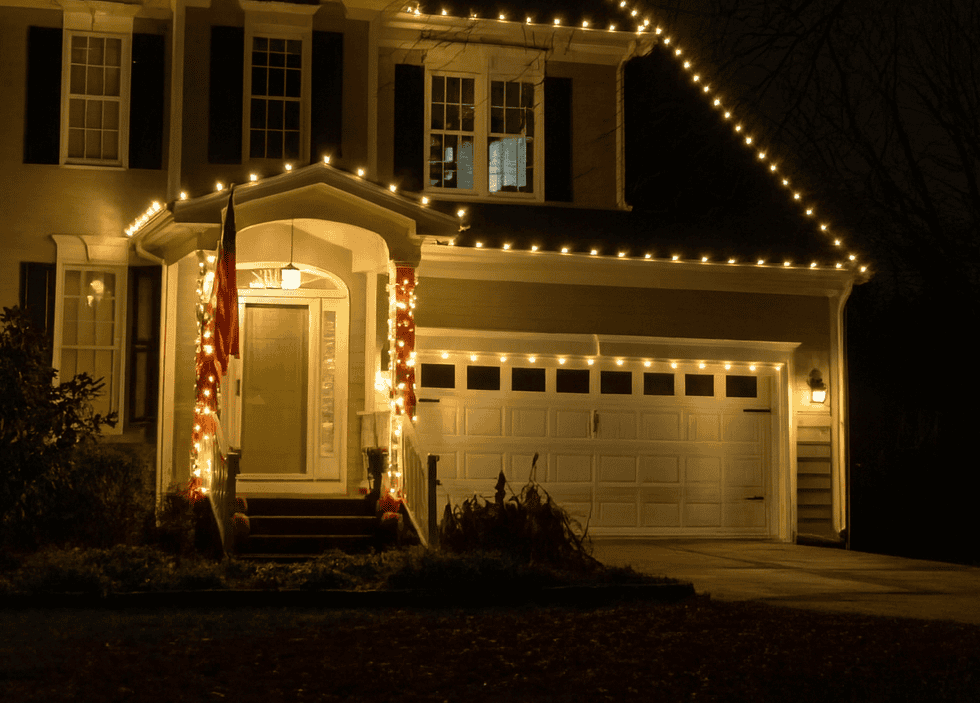

Professional Christmas light installation means a trained crew designs, hangs, maintains, and removes a home’s holiday lighting, while DIY installation means the homeowner buys the lights and does the work personally. The two approaches differ in equipment, time commitment, lighting quality, safety considerations, and who handles upkeep and storage after the season ends.
What Is Professional Christmas Light Installation?
Professional Christmas light installation is a seasonal service in which a lighting company plans and installs a display on a home’s roofline, peaks, and landscaping. The work typically includes lighting design, installation, in-season maintenance, takedown, and off-season storage.
In many professional arrangements, the lights and materials are provided by the company rather than purchased by the homeowner. The display is usually custom-fit to the home, with strands cut and clipped to match the length of each roofline and gutter section.
What Is DIY Christmas Light Installation?
DIY Christmas light installation is when homeowners purchase their own lights, clips, and extension cords and hang the display themselves. It gives full control over timing, layout, and style, and many families enjoy decorating together as a seasonal tradition.
A DIY display can be as simple as a string of lights along the front porch or as involved as a full roofline outline. The homeowner is responsible for every step, from planning and setup to repairs, removal, and storage.
How Professional and DIY Installation Work Differently
The biggest differences come down to equipment, materials, time, and responsibility.
Equipment and Roofline Access
Professional installers use commercial-grade ladders, fall protection, and specialized clips designed for gutters and shingles. These tools allow lights to be attached without nails, staples, or other fasteners that can damage roofing or trim.
DIY installation typically relies on household ladders and retail clips. Homeowners working on a roofline often need to plan carefully for footing, ladder placement, and changing winter weather, since cold temperatures, wind, and early ice make rooftop work more demanding.
Do Professional Installers Use Different Lights Than Store-Bought Strands?
In many cases, yes. Professional-grade lighting often uses commercial sockets, sealed bulbs, and heavier wire built for winter weather durability and repeated seasonal installation. Retail strands are designed for lighter residential use and are widely available in stores.
The difference usually shows up over time. Heavier-duty components tend to hold up through wind, snow, and freezing temperatures, while lighter strands may need more frequent replacement from one season to the next.
Time and Scheduling
A professional crew can often complete a full roofline installation in a matter of hours because the design is planned in advance and the team works together. A DIY installation of a similar size may take a full weekend or longer, depending on the home, the weather, and the number of helpers available.
Maintenance, Takedown, and Storage
With professional installation, burned-out bulbs, loose strands, and timer issues are typically handled by the company during the season, and removal and storage are usually part of the service. With DIY lighting, the homeowner troubleshoots problems, takes the display down after the holidays, and finds space to store everything until next year.
When Professional Installation May Be Used
Professional installation is often used for two-story homes, steep or complex rooflines, and homes with multiple peaks, where lighting requires extended ladder or rooftop work. It is also common among homeowners who want a custom lighting design, have limited time during the busy holiday season, or prefer not to handle takedown and storage.
Homeowners who want a consistent, evenly spaced roofline outline each year often choose a professional approach because the display is measured, fitted, and reinstalled the same way every season.
When DIY Installation May Be Used
DIY installation is a common choice for smaller or single-story homes, simple displays, and homeowners who enjoy the hands-on process. It works well for porch lighting, small trees and shrubs, window decorations, and other areas that can be reached safely from the ground or a short ladder.
It is also a natural fit for families who treat decorating as a tradition in itself, or who like to change their display frequently from year to year.
Can Professional and DIY Lighting Be Used Together?
Yes. Many homeowners combine both approaches. A common arrangement is professional installation for the roofline and upper-story areas, with the homeowner adding their own decorations at ground level, such as inflatables, pathway markers, lighted figures, or porch decor.
This combination keeps the more demanding rooftop work with an experienced crew while leaving room for personal, hands-on touches that families enjoy adding themselves.
Which Factors Matter Most When Choosing an Approach?
The approach that fits depends on the home and the household. The most important factors to weigh are the height and complexity of the roofline, how much time is available during the season, the desired level of lighting design, and who will handle repairs, removal, and storage.
Comfort with ladder and rooftop work also matters. Single-story homes with simple rooflines are often manageable for DIY, while taller homes and larger displays involve more equipment, planning, and time.
Understanding the Difference Between Professional and DIY Installation
DIY installation offers hands-on control and flexibility, while professional installation shifts the design, equipment, rooftop work, maintenance, takedown, and storage to a trained crew. Both approaches can produce a festive display, and many homes use a mix of the two.
For homeowners with taller homes, complex rooflines, or limited time during the holidays, professional installation provides a full-season approach to roofline lighting and lighting design. Homeowners interested in how that seasonal process works can learn more about Christmas Light Installation in Omaha, NE.
