
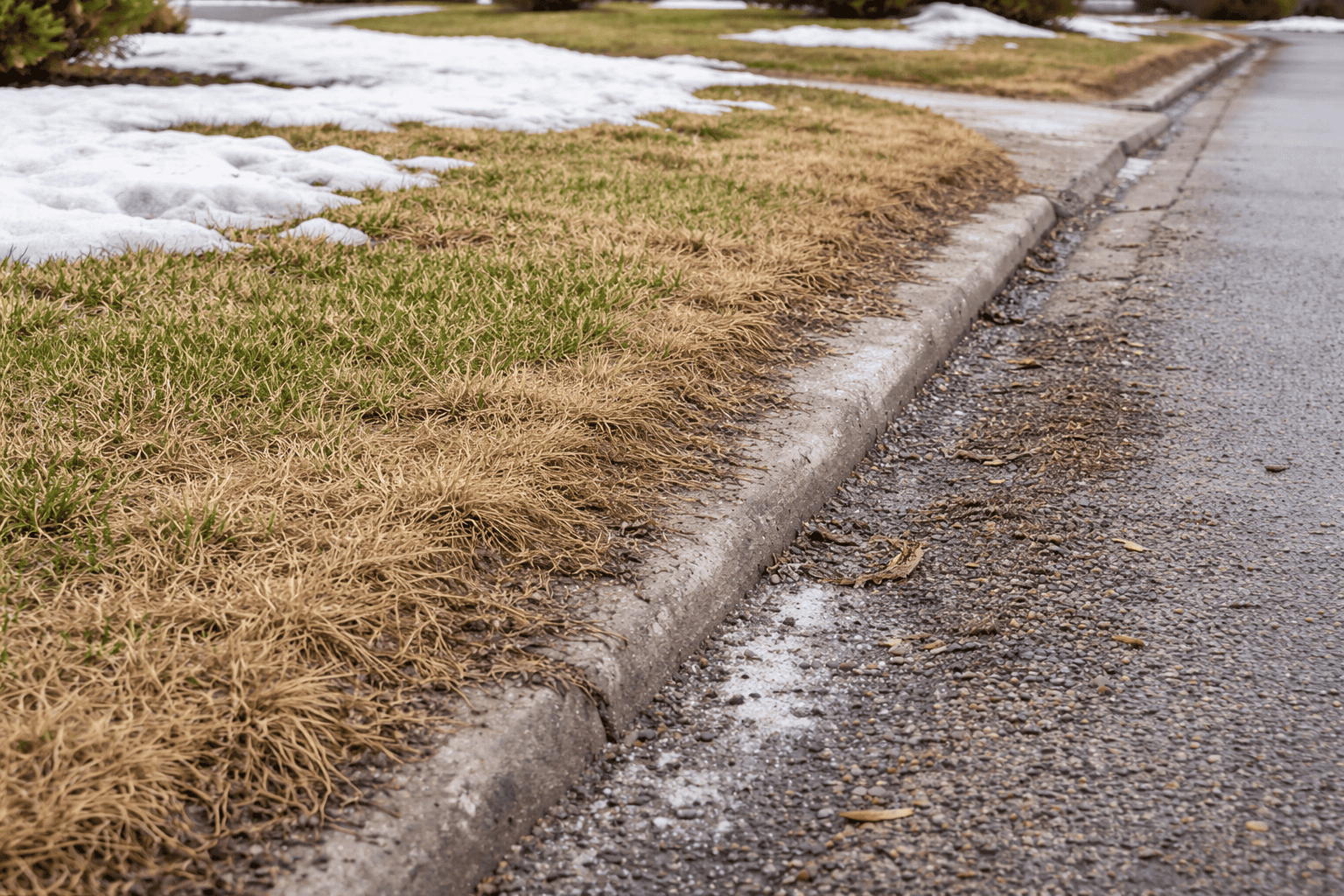

Salt damage occurs when deicing salts used on roads, sidewalks, and driveways accumulate in lawn soil or coat grass blades, disrupting the plant’s ability to absorb water and nutrients and influencing soil pH and why it matters for healthy turf. The salt alters soil chemistry and pulls moisture out of plant tissues, which can cause browning, dehydration, and reduced turf growth. In Omaha, Nebraska and surrounding areas, winter snow removal practices often expose lawns near streets and walkways to repeated salt exposure.
Why Deicing Salt Can Harm Lawn Grass
Salt is commonly used during winter to melt ice and improve traction on roads and walkways. While this helps maintain safer driving and walking conditions, it can also create problems for nearby landscapes. When snow and ice melt, dissolved salt can wash into surrounding soil or be sprayed onto lawns by passing vehicles.
Once salt enters the soil, it can interfere with how grass roots absorb water. High salt concentrations create an environment where moisture becomes difficult for plants to access. Even when water is present in the soil, the grass may not be able to use it effectively. As a result, the turf may appear dry or stressed even though the ground contains moisture.
Salt exposure can also affect soil structure over time. Repeated salt accumulation can influence soil particles and may contribute to compaction, reducing the ability of water and air to move freely through the soil profile. These conditions can make it harder for grass roots to grow and establish healthy development.
How Salt Spray Damages Grass Blades
Salt does not only affect the soil beneath the lawn. In many cases, grass is also exposed to salt through spray that occurs when vehicles pass over salted roads or when snow containing road salt is pushed toward the lawn.
This salty moisture can coat the grass blades and plant surfaces. When salt enters the plant tissue, it draws water out of the cells. This process can cause dehydration within the grass plant itself. As moisture leaves the cells, the grass may begin to turn brown or appear burned along the edges.
Damage from salt spray often appears along the edges of lawns closest to the street, driveway, or sidewalk. Turf in these locations may show uneven growth or discoloration during late winter and early spring.
Why Salt Buildup Can Persist in Soil
Salt contamination sometimes disappears naturally over time, but it can also remain in the soil depending on weather patterns and drainage conditions. Rainfall and melting snow can gradually carry salt deeper into the soil profile and away from the root zone.
However, if precipitation is limited or if salt is applied repeatedly over multiple winters, the material may accumulate instead of washing away. In these situations, the concentration of salt in the soil can increase gradually over time.
This buildup may contribute to a stressful environment for grass and other landscape plants. Lawns growing in compacted or poorly draining soil may be especially vulnerable because water movement through the soil is slower. Conditions like these can occasionally be observed in areas of Omaha where winter road treatment is frequent and snow piles remain along lawn edges for extended periods.
Steps Homeowners Can Take to Reduce Salt Damage
Lawns located near streets, sidewalks, and driveways are typically the most vulnerable to salt exposure. Homeowners can reduce the risk of damage by managing how salt and snow interact with the landscape.
One helpful step is rinsing affected lawn areas with water once temperatures rise above freezing and the snow has melted. Deep watering can help move salt deeper into the soil where it is less likely to affect grass roots. Areas closest to roads or sidewalks often benefit the most from this practice.
Snow removal habits can also influence salt exposure. Moving snow that contains road salt directly onto the lawn may increase the concentration of salt in the soil as it melts. Whenever possible, directing snow piles away from turf areas can help limit the amount of salt entering the lawn.
Some homeowners also choose alternatives to traditional rock salt when treating private driveways or walkways. Materials such as sand or traction-based products can help improve footing without introducing as much salt into nearby soil.
Physical barriers may also provide some protection in high-exposure areas. Temporary fencing, plastic sheeting, or other protective barriers can reduce the amount of salty spray reaching lawn surfaces during winter months.
In landscapes where road spray is unavoidable, planting salt-tolerant shrubs along the street edge may help reduce the amount of salt reaching the turf. These plantings can act as a buffer that intercepts salt spray before it reaches the grass.
Helping Lawns Recover After Winter Salt Exposure
When winter ends, some lawns may show thinning or brown patches along areas exposed to salt. Early spring lawn care practices can help the turf gradually recover as growing conditions improve.
Removing dead grass through light raking may help improve air circulation around the remaining turf. Lawns may also benefit from soil conditioning practices that improve soil structure and drainage. Materials such as gypsum are sometimes used in soil management to help improve soil balance and support recovery after salt exposure.
Adding organic matter to the soil can also support long-term soil health and strengthen the soil food web in lawn soil. Organic materials help improve soil structure and support microbial activity, which plays an important role in nutrient cycling and turf development.
Homeowners who want to learn more about soil-based lawn care practices can explore the principles behind Organic Lawn Care, which focuses on improving soil conditions that support healthy turf growth over time.
Can Outdoor Faucets Be Used to Rinse Salt Off a Lawn?
Outdoor faucets can sometimes be used to rinse salt from lawn areas during late winter, but temperature conditions must be considered carefully. Water lines connected to exterior faucets are vulnerable to freezing during cold weather.
If temperatures have remained above freezing for several days, it may be possible to briefly connect a hose to rinse affected lawn areas. After using the hose, it is important to disconnect it and drain the outdoor plumbing to prevent freezing.
Leaving a hose attached during freezing temperatures can trap water in the pipe. If that water freezes, it expands and may place pressure on plumbing inside the home. This expansion can lead to cracks or leaks in the water line.
For homeowners dealing with winter lawn stress, early spring watering combined with improving soil conditions can help the grass begin recovering once warmer weather returns.