
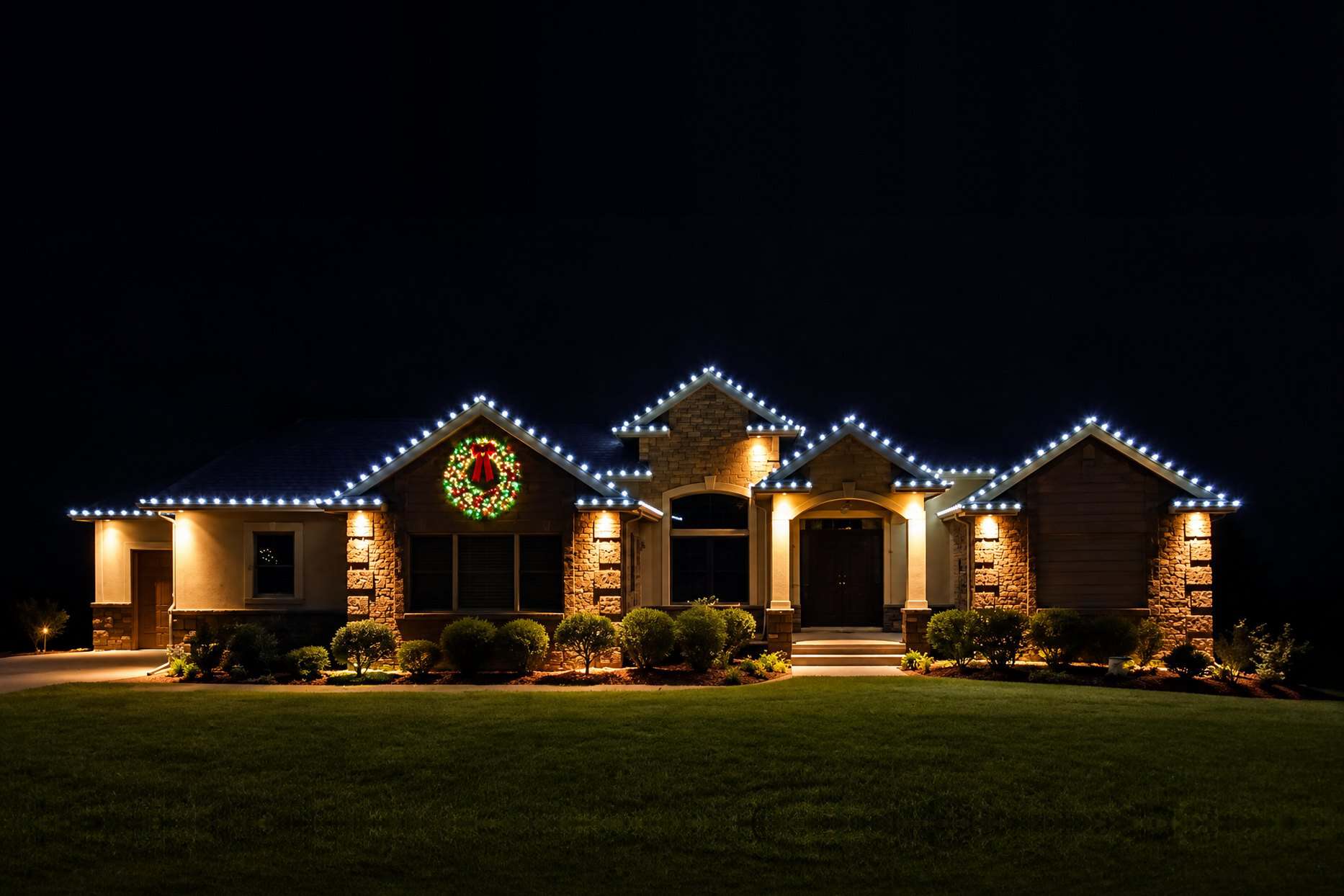

The cost of Christmas light installation depends mainly on how much of a home is being lit, how difficult the roofline is to reach, and what type of lighting is used. Accent lighting, the level of custom design, and whether the lights are owned by the homeowner or provided through a seasonal service also shape the final price.
Why Christmas Light Installation Costs Vary From Home to Home
No two homes share the same roofline. A compact single-story home and a large two-story home with several peaks require very different amounts of lighting, labor, and equipment, even when the finished look is similar.
For this reason, professional Christmas light installation is usually quoted for each individual property rather than from a fixed price list. Understanding the main cost factors makes it easier to read a quote, ask informed questions, and compare options fairly.
Roofline Length and Coverage
The single largest cost factor is the total length of roofline being lit. Installers measure the gutters, eaves, and peaks that will hold lights, and every additional foot requires more bulbs, more wire, more clips, and more installation time.
Coverage choices matter just as much as the size of the home. Lighting only the front-facing roofline costs less than wrapping the entire perimeter, and adding second-story rooflines or garage peaks increases the total footage. Many homeowners start with the portions of the roof visible from the street and expand the display in later seasons.
Roof Height, Pitch, and Complexity
Height and roof shape affect how long an installation takes and how much safety equipment is required. A single-story ranch can often be lit from a ladder, while a two-story home may require taller ladders, roof access, and additional fall protection.
Steep roof pitches, multiple peaks, dormers, and hard-to-reach sections all add time. Weather adds another layer. Across the Midwest, seasonal installation often takes place in cold, wind, or early ice, which requires careful footing and slower, more deliberate work on the roof.
Type of Lighting Used
The lighting itself is a major part of the cost, and the options vary in both appearance and price.
Classic C9 Lighting
C9 lighting uses larger traditional bulbs to create the familiar warm outline along rooflines and peaks. It is the most common choice for residential roofline lighting and is typically the baseline for most installation quotes.
RGB Color-Changing Lighting
RGB lighting uses programmable bulbs that can switch between colors and effects, usually controlled with a remote or app. Because the components are more advanced, RGB lighting generally adds a modest amount to the cost of a comparable C9 display on a typical home.
Professional-Grade and Retail Lighting
Professional-grade lighting uses commercial sockets, sealed bulbs, and heavier wire designed for winter weather durability and repeated seasonal installation. Retail light strands cost less at the store but are built for lighter use and tend to fail more often in wind, snow, and freezing temperatures. The grade of lighting affects both the upfront cost and how reliably a display stays lit through the season.
Accent Lighting and Landscape Features
Many displays extend beyond the roofline. Wrapped trees, lit bushes, wreaths, garland, and walkway lighting all add visual depth, but they also add materials and labor.
Accent lighting varies widely in cost because every yard is different. A small ornamental tree takes far less time and lighting than a mature shade tree, and a single wreath is very different from garland along an entire porch. This is one reason accent features are usually priced as part of a custom lighting design rather than from a set menu.
Power Access and Display Control
Every display needs a reliable power source. The number and location of outdoor outlets, the capacity of the home’s circuits, and the distance between the outlets and the lit areas all influence how a display is planned.
Larger displays may be divided into separate zones so no single circuit is overloaded. Automated timers are also common, allowing the lights to turn on and off each evening without anyone needing to plug them in. More zones and more complex control add planning and installation time.
Owning Lights Compared With Using a Seasonal Lighting Service
There are two common ways homeowners pay for holiday lighting, and they spread costs out differently over time.
When homeowners buy and install their own lights, the main expense is the upfront purchase of bulbs, strands, clips, and extension cords. Ongoing costs include replacing burned-out or damaged strands, finding storage space in the off-season, and the time spent installing and removing the display each year.
With a seasonal lighting service, the lighting materials are typically provided by the company and remain its property. The seasonal fee generally covers installation, maintenance during the season, takedown, and storage. Instead of a large upfront purchase followed by replacement costs, homeowners pay a predictable amount each season. Comparing the two approaches over several years, rather than a single season, gives the clearest picture of the true cost.
Why Do Professional Quotes Vary Between Companies?
Two quotes for the same home can look very different because companies include different things in their price. Some sell the lights to the homeowner, while others provide them as part of a service. Some include maintenance, takedown, storage, and sales tax, while others charge for those separately.
The quality of the lighting, the amount of liability insurance carried, and the level of custom design also vary between companies. Comparing quotes line by line, including what happens after the holidays, helps homeowners understand what each price actually covers.
Understanding Your Christmas Light Installation Costs
The cost of Christmas light installation comes down to a handful of clear factors: roofline length, roof height and complexity, lighting type and grade, accent features, power setup, and whether the lights are owned or provided through a service. Each one affects the amount of materials, labor, and planning a display requires.
Homeowners who want to see how these factors come together in a complete seasonal lighting service can learn more about Christmas Light Installation in Omaha, NE.
