
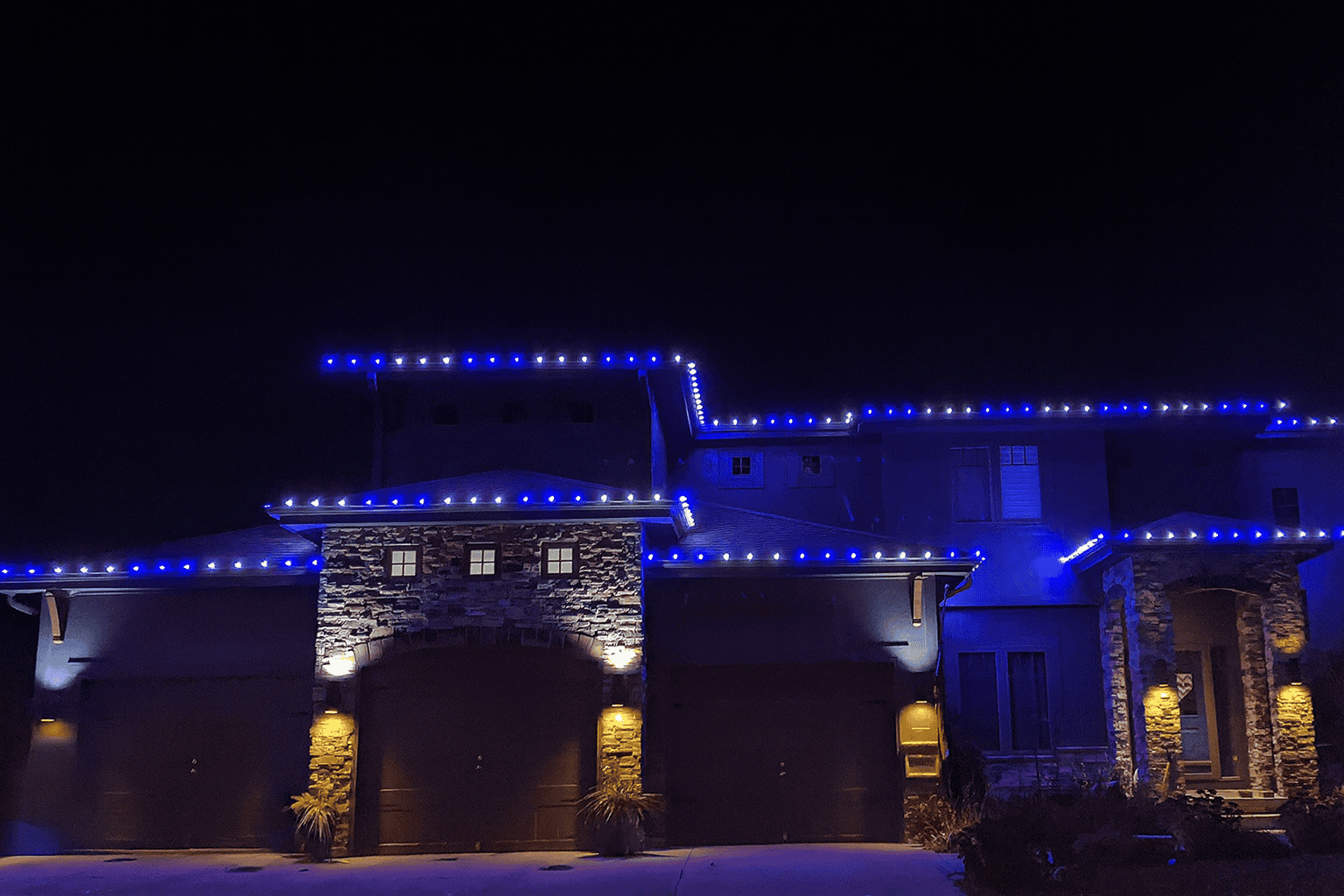

Christmas light design is the process of choosing where lights go, what colors and styles to use, and how each element works together so a home’s display looks balanced from the street. Most exterior designs start with the roofline and then add accents such as wreaths, lit trees, wrapped columns, or walkway lighting to match the home’s architecture.
Start With the Roofline
The roofline is the foundation of most exterior holiday displays. Outlining gutters, eaves, and peaks with evenly spaced C9 bulbs creates a clean frame that defines the shape of the home and is visible from a distance.
Homes with multiple peaks, dormers, or rooflines at different heights offer more opportunities for depth. Lighting each level creates layers that highlight the architecture, while lighting only the front-facing roofline keeps the display simpler and more focused.
Choosing a Color Scheme
Color sets the overall tone of a display. Most designs fall into a few common styles, and choosing one early makes every other decision easier.
Classic Warm White
Warm white lighting creates a timeless, elegant look that complements brick, stone, and neutral siding. It is one of the most popular choices for homeowners who want a refined display that feels traditional without being busy.
Multicolor and Retro
Multicolor bulbs bring a playful, nostalgic feel, especially in larger C9 sizes that recall the oversized holiday bulbs of past decades. This style works well on homes with simple siding where the colors can stand out.
Color-Changing RGB
RGB lighting uses red, green, and blue diodes that blend to create a wide range of colors and effects. With a remote or app, the same roofline can display classic warm white, solid colors, alternating patterns, or team and holiday color combinations throughout the year, all without changing a single bulb.
Highlighting Architectural Features
Beyond the roofline, a home’s architecture offers natural places to add light. Columns, porch railings, entryways, and arched doorways can be wrapped with lights or lighted garland to draw attention to the front entrance.
Windows and gables are also natural focal points. A lit wreath centered on a front gable or above a garage adds a finishing touch without overwhelming the roofline design.
Adding Trees, Shrubs, and Landscaping
Landscape lighting adds depth to a display by bringing light down to ground level. Wrapping the trunk and branches of a front-yard tree, or covering evergreens and shrubs with lights, balances a lit roofline and fills the space between the house and the street.
Trees can be lit in a single color to match the roofline or used as a contrasting accent. Uplighting, where a light is placed at the base of a tree and aimed upward, is another way to highlight landscaping with a softer effect.
Lighting Walkways and Entry Paths
Walkway and driveway lighting creates clean, illuminated lines that guide guests toward the front door. Low pathway markers or lights placed along the edges of a walkway add both visual appeal and practical visibility during long winter evenings.
Pathway lighting tends to look most natural when it echoes the rest of the display, such as warm white markers beneath a warm white roofline, so the design feels connected from the street to the entry.
Minimal vs. Full Displays
Some homeowners prefer a minimal display: a single clean roofline outline and perhaps one wreath. This approach is understated, easy to maintain, and lets the home’s architecture take center stage.
Others choose a fuller display that combines roofline lighting, wrapped columns, lit trees, wreaths, and pathway lighting. Fuller designs create a more dramatic effect but benefit from careful planning so every element feels intentional rather than crowded.
Mixing lighting types is common in fuller displays. A warm white roofline paired with colored trees, or a classic roofline paired with lit sculptures or shaped accents in the yard, can add variety while still keeping the roofline as the anchor of the design.
How Do You Make a Christmas Light Display Look Cohesive?
A cohesive display usually comes down to consistency. Using the same color temperature throughout, keeping bulb spacing even along every roofline, and choosing one or two accent styles rather than many all help the design read as a single, unified look.
It also helps to view the home from the street before deciding on placement. Lighting areas that are visible from the road and the front walk creates the most visual impact, while sides of the home that are hidden from view can often be left unlit.
Planning a Design That Fits the Home
Every home has different rooflines, landscaping, and focal points, so effective lighting design starts with how the home is built rather than a one-size-fits-all template. Measuring rooflines, noting power access, and deciding which features to emphasize all shape the final plan.
Planning before the season begins also allows time to make changes, such as adjusting colors or adding accent pieces, before installation day.
Understanding Christmas Light Design Options
Strong Christmas light designs start with a well-defined roofline, follow a consistent color scheme, and add accents that highlight the home’s architecture and landscaping. Whether the goal is a minimal warm white outline or a full display with trees, columns, and color-changing lighting, a clear plan keeps every element working together.
Homeowners who want to see how custom lighting designs are planned and installed can learn more about Christmas Light Installation in Omaha, NE.
