
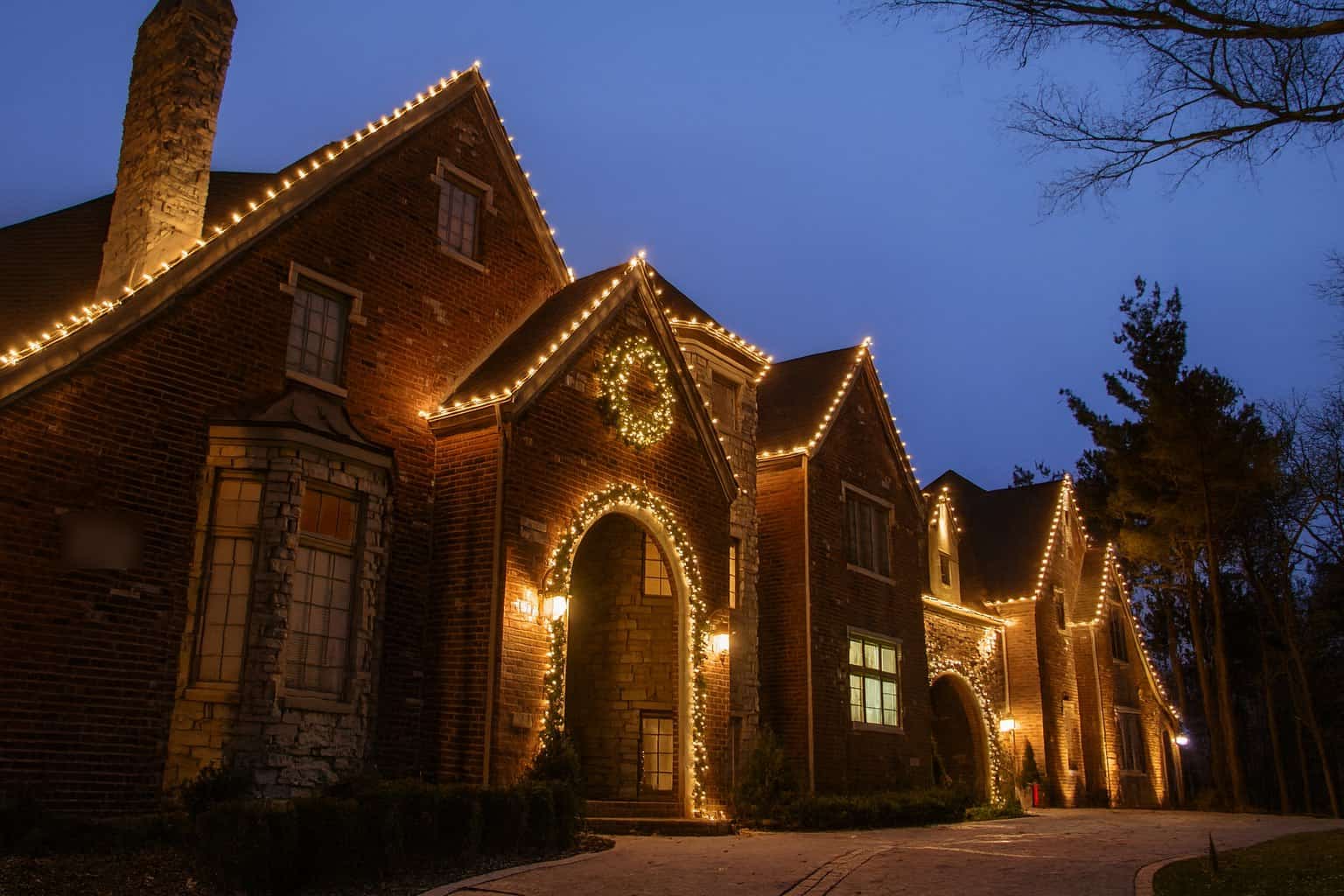

Most homeowners schedule professional Christmas light installation in early fall, typically in September or October, so the lights can be installed in October or November and turned on around Thanksgiving. Scheduling early allows more choice of installation dates and gives crews time to complete rooftop work before freezing temperatures, snow, and ice arrive.
Why Installation Happens Before the Lights Are Turned On
Christmas light installation and turning the lights on are two separate steps. Lights can be installed weeks before the holidays and simply stay off until the homeowner is ready for the season to begin.
Automated timers make this easy. Once the display is installed and tested, the timer can be set to start on a specific date, such as Thanksgiving evening or the first weekend of December. This separation allows the physical work to happen during milder fall weather while the display itself still debuts at the traditional time.
When Do Most Homeowners Turn On Their Christmas Lights?
The most common time to turn on holiday lights is Thanksgiving weekend. Many families make it part of their celebration, switching on the display after Thanksgiving dinner or during the long weekend that follows.
Others prefer to wait until the first week of December, while some enjoy turning them on in mid-November as the days grow shorter. There is no single correct date, which is another reason installing early and using a timer works well. The lights are ready whenever the household decides the season has started.
Shorter days also play a role. As daylight decreases toward the winter solstice in late December, many homeowners appreciate the extra warmth and brightness a lit display adds to long winter evenings, which is one reason some choose to turn their lights on a little earlier in November.
How Weather Affects Installation Timing
Weather is one of the most important factors in scheduling. In the Midwest, late fall can bring sudden cold snaps, strong winds, and early ice, all of which make ladder and rooftop work slower and more demanding.
Installing in October or early November usually means drier roofs, more comfortable temperatures, and longer daylight hours to work in. As December approaches, shorter days and wintry conditions can limit how much work can be done in a single day, and weather delays become more likely.
Cold temperatures also affect the materials themselves. Wire becomes stiffer and plastic clips can become more brittle in freezing conditions, which makes careful, unhurried installation more important. Completing the work before the coldest stretch of the season helps the display go up cleanly and stay secure through winter wind and snow.
Planning the Display Ahead of Time
Scheduling early also gives homeowners time to make decisions without the pressure of the holiday rush. Choosing a lighting style, such as classic warm white, multicolor, or color-changing lighting, often involves input from the whole family.
Early planning also makes it easier to set a seasonal budget and decide which parts of the home to highlight, whether that is the main roofline, every peak, or additional accent lighting on trees and shrubs. With those decisions made in advance, the installation itself becomes one less task to manage during an already busy season.
Seasonal Scheduling and Installer Availability
Professional Christmas light installation takes place in a short window, usually from October through early December. Because every installation must fit within those few weeks, calendars tend to fill as the season approaches.
Many lighting companies schedule returning customers first, often through renewal notices sent in late summer or early fall. New installations are then scheduled into the remaining dates. Homeowners who wait until late November may find fewer dates available, especially for larger or more complex displays that require more installation time.
Scheduling earlier does not mean the lights go up immediately. Most installers set a specific installation date within the season, so an early booking simply reserves a place on the calendar while the actual work still happens at the planned time.
Checking HOA and Neighborhood Guidelines
Some homeowners associations have guidelines about holiday decorations, including when displays can go up and when they need to come down. Most HOA rules focus on items such as inflatables and lawn decor rather than roofline lighting, but policies vary from one neighborhood to the next.
Reviewing the association’s guidelines before scheduling helps avoid conflicts and makes it easier to plan installation and takedown dates that fit within any neighborhood requirements.
When Christmas Lights Are Typically Taken Down
Most displays are taken down in early to mid-January, after the New Year’s holiday. Some homeowners prefer to have their lights removed promptly after the holidays, while others like to keep them up a little longer during the darkest weeks of winter.
Like installation, takedown is often scheduled in advance. Planning the removal date ahead of time helps ensure the lights come down on a predictable schedule, before heavy snow or ice makes rooftop work more difficult.
Understanding the Christmas Light Installation Timeline
A typical Christmas light timeline follows a simple pattern: plan and schedule in early fall, install in October or November, turn the lights on around Thanksgiving, and take them down in January. Scheduling early provides more flexibility with installation dates, more favorable working conditions, and more time to plan the display.
Homeowners who want to see how this seasonal timeline fits into a complete lighting service can learn more about Christmas Light Installation in Omaha, NE.
